
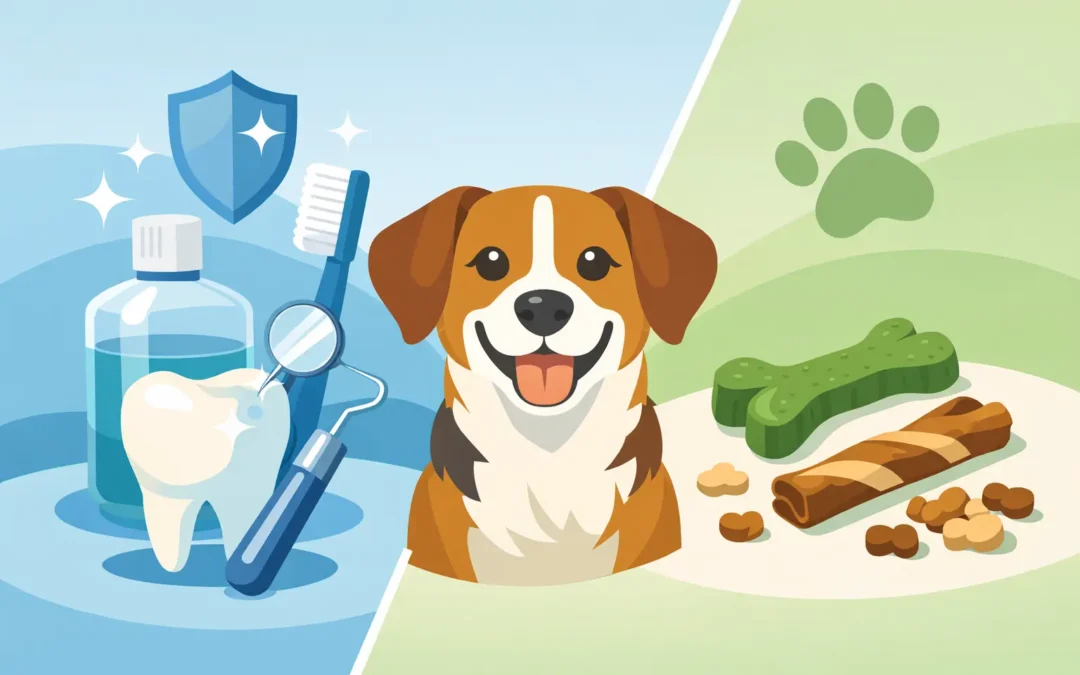
A fresh kiss from your dog should feel sweet, not make you lean away. When pet parents compare teeth cleaning versus dental chews, they are usually looking for a simple answer: which one will keep their companion’s mouth clean, comfortable, and ready for all those close-up cuddles?
The honest answer is that both can have a place in a thoughtful routine, but they do very different jobs. A dental chew may support day-to-day maintenance, while hands-on teeth cleaning focuses on the buildup you can see and the areas a chew may miss. The best choice depends on your dog’s habits, age, comfort level, and current oral health.
Teeth Cleaning Versus Dental Chews: The Real Difference
Dental chews are treats or chewable products designed to encourage chewing. Their texture may create friction against the tooth surface, which can help reduce some soft plaque before it hardens. For many dogs, that makes them an enjoyable part of a regular home-care routine. They also offer a moment of enrichment, especially for dogs who love settling in with a satisfying chew after a walk or dinner.
Teeth cleaning is a more direct form of care. It involves gently cleaning visible tooth surfaces and helping lift away surface buildup, particularly around the gumline where residue often collects. A professional grooming teeth-cleaning service is designed to support a cleaner-looking smile and fresher breath in a calm, comfort-focused setting.
Neither option is a magic fix. Dental chews do not reach every tooth equally, and they cannot replace professional veterinary dental care when a dog has signs of pain, significant tartar, loose teeth, bleeding gums, or an infection. Grooming-based teeth cleaning also does not take the place of a veterinary dental examination or a dental procedure performed under veterinary supervision when one is needed. Think of routine grooming care as part of ongoing maintenance, not a substitute for medical treatment.
What Dental Chews Can Do Well
A well-chosen dental chew can be a convenient addition to life with a busy household. If your dog enjoys chewing safely and consistently, a chew may help interrupt the daily buildup that comes from meals, treats, and normal mouth bacteria. It can also make oral care feel less like a chore for pets who are still learning to accept brushing or mouth handling.
The catch is that effectiveness varies. Some dogs swallow chews quickly, barely giving the product time to work. Others favor one side of the mouth, leaving the opposite side with less contact. Small dogs, senior pets, and dogs with crowded teeth may also have tight spaces that are difficult for any chew to address.
Choose a chew that fits your dog’s size and chewing style, and always supervise treat time. A chew that is too hard can pose a risk to teeth, while one that is too small may be swallowed too quickly. Calories matter, too. For dogs who are watching their weight, a daily dental treat should be counted as part of the overall feeding plan.
Dental chews are most useful when they are consistent, safe, and matched to the individual dog in front of you. They are a helpful supporting player, not the entire oral-care plan.
Why Direct Teeth Cleaning Matters
Food particles and plaque do not politely stay on the easy-to-reach front teeth. They tend to gather near the gumline and along the back teeth, where many dogs are less comfortable allowing attention at home. As plaque sits, it can harden into tartar, which is much tougher to manage with a chew alone.
Routine teeth cleaning offers a closer look at your pet’s visible teeth and breath while providing gentle, focused care. Beyond the polished appearance, many pet parents appreciate the little everyday differences: less noticeable breath, a cleaner mouth after meals, and a pup who looks as cared for as they feel after a bath, brush-out, and nail trim.
For dogs who are new to mouth care, the experience matters as much as the service itself. Rushing, forcing the mouth open, or overwhelming a nervous pet can make future care harder. A gentle approach helps build trust over time. That is especially valuable for sensitive dogs, older dogs, and pups who have had difficult grooming experiences in the past.
At Jolis Grooming, oral care is approached as one more comforting part of a personalized grooming visit. The goal is never to rush a pet through a task. It is to help them feel safe, handled with patience, and sent home looking and feeling refreshed.
When Chews Are Not Enough
Bad breath is easy to dismiss as “dog breath,” but a sudden change or a strong, persistent odor deserves attention. The same is true if your dog paws at their mouth, drops food, chews only on one side, resists having their face touched, drools more than usual, or has visibly red or bleeding gums.
Those signs call for a veterinarian, not another chew or a cosmetic clean. Your veterinarian can assess what is happening below the gumline, check for pain or disease, and recommend appropriate treatment. This is one of the kindest choices a pet parent can make, because dogs often hide discomfort remarkably well.
Even without obvious warning signs, take a closer look at your dog’s teeth regularly. Yellow or brown buildup near the gums, a change in appetite, or a mouth that suddenly smells much stronger than usual are all good reasons to schedule a veterinary conversation. Early attention can spare your pet unnecessary discomfort later.
Building a Routine Your Dog Will Accept
The most effective dental routine is the one you can keep doing. For some families, that means a dog-safe dental chew several times a week, daily tooth brushing at home, and routine grooming appointments that include teeth cleaning. For others, a sensitive pet may need a slower introduction to any type of mouth care.
Start small. Let your dog become comfortable with you touching the muzzle, lifting the lip briefly, and offering praise. Use only toothpaste made for dogs, never human toothpaste, which can contain ingredients that are unsafe for pets. A soft dog toothbrush, finger brush, or gauze can be a gentle starting point depending on what your dog tolerates.
If brushing is not yet realistic, do not let perfection stop you from building a better habit. A safer dental chew, a brief daily look at the teeth, and patient handling are all meaningful steps. Over time, many dogs learn that oral care is simply another part of being pampered.
A simple way to choose
If your dog has a healthy mouth, enjoys chewing, and you want added daily support, dental chews can be a practical choice. If you are noticing visible buildup, stale breath, or teeth that need more focused attention, a professional teeth-cleaning add-on may provide the refresh you are looking for.
If your dog seems painful or has bleeding gums, loose teeth, swelling, or a sudden change in eating behavior, contact your veterinarian first. Comfort always comes before cosmetics.
Give Their Smile the Same Care as Their Coat
A glossy coat, soft paws, neatly trimmed nails, and a clean smile all contribute to the little confidence you see when your dog trots back into the house after a grooming visit. Oral care may not be the most glamorous part of pet parenting, but it is one of the most loving. It supports the everyday moments that matter – happy meals, playful fetch sessions, and close cuddles without hesitation.
Choose dental chews thoughtfully, stay alert to changes in your dog’s mouth, and make gentle teeth cleaning part of their regular care. Your pet does not need a perfect routine. They need a caring one that respects their comfort and helps them feel their very best.