
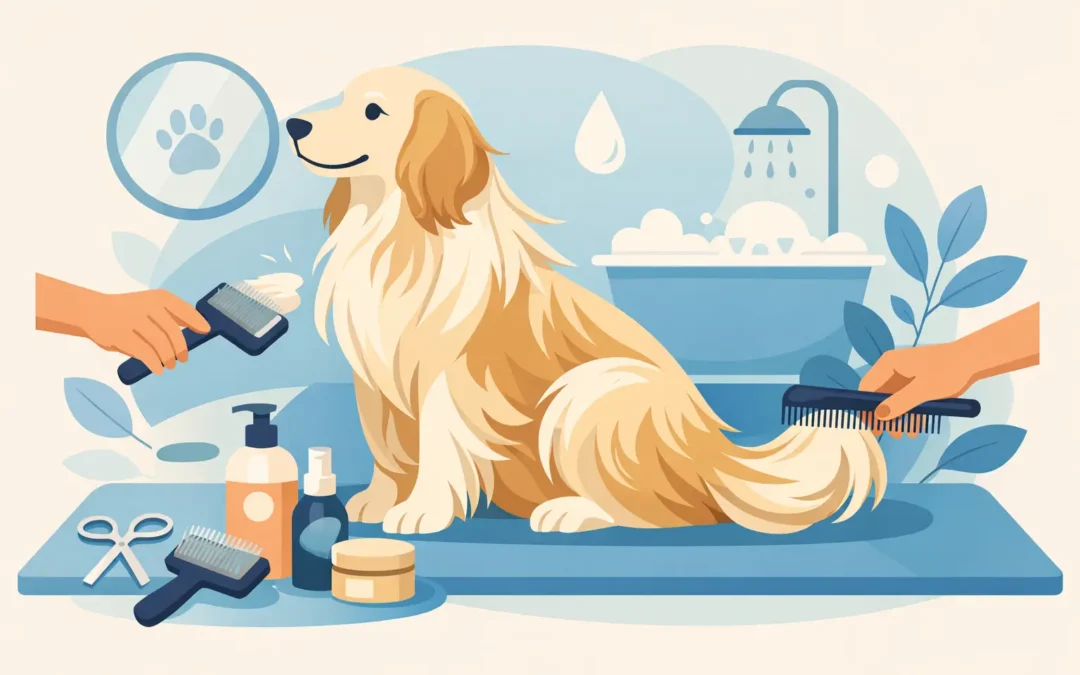
A silky coat can hide a problem until your hand finds a tight knot behind the ear or beneath the collar. The best grooming routine for long haired dogs is not about chasing a show-ready finish every day. It is about giving your dog gentle, consistent care that keeps their skin comfortable, their coat free to move, and their grooming time calm enough to feel like a little pampering.
Long coats are beautiful, but they collect more than compliments. Loose undercoat, moisture, grass, burrs, food around the muzzle, and friction from harnesses can all turn into tangles quickly. A thoughtful routine catches those small issues before they become painful mats that pull at the skin.
Start With the Right Rhythm
Most long-haired dogs benefit from a quick brush several times a week, with many needing daily attention in high-friction areas. The exact schedule depends on coat type, lifestyle, and length. A flowing, fine coat can tangle faster than a coarser coat, while an active dog who loves puddles, the backyard, or weekend adventures may need more frequent checks.
Set aside five to ten calm minutes rather than waiting for a major brushing session. Short, pleasant sessions are easier on your dog and much more manageable for you. Choose a quiet place, offer gentle praise, and stop before your pet becomes restless. The goal is to build trust, not to wrestle through a routine.
A professional full groom is still valuable even for devoted at-home brushers. Regular appointments help maintain a healthy coat shape, clean areas that are difficult to manage at home, and provide careful attention to nails, paws, ears, and hygiene areas.
The Best Grooming Routine for Long Haired Dogs at Home
Begin by running your hands over your dog before reaching for a brush. Feel behind the ears, under the chin, beneath the front legs, around the collar line, along the belly, and where the back legs meet the body. These are the places where rubbing and movement create hidden knots. If you find a small tangle, address it early with patience instead of assuming it will brush out later.
Use a quality slicker brush or pin brush suited to your dog’s coat, then follow with a metal comb. The brush opens and separates the outer coat, while the comb tells you whether you have truly reached the skin. If the comb catches, there is still a tangle underneath. Work in small sections, beginning near the feet and moving upward, so you do not simply brush over knots on the surface.
Hold the hair close to the skin while working through a small snag. This reduces pulling and helps your dog stay comfortable. For light tangles, a pet-safe detangling spray can add slip and make the process gentler. Never yank, and avoid cutting mats out with household scissors. Skin can pull up into a mat and be easily injured. A tight, close-to-the-skin mat is a job for a trained groomer.
Give Extra Attention to Friction Zones
A long coat does not mat evenly. The areas below deserve a quick check every day or two, especially after outdoor play or rainy weather:
- Behind and beneath the ears
- Under collars, harnesses, and bandanas
- Under the front legs and across the chest
- The belly, sanitary area, and inner legs
- Between the paw pads and around the tail
A few seconds spent checking these spots can prevent a much longer, less comfortable grooming experience later.
Bathing Without Creating More Tangles
A bath should leave your dog fresh and comfortable, not turn a few loose hairs into a web of knots. Always brush and comb the coat thoroughly before bathing whenever possible. Water tightens existing tangles, and shampoo can make a mat harder to separate.
Use lukewarm water and pet-safe shampoo selected for your dog’s skin and coat needs. Human shampoo is not a substitute because canine skin has different needs and can become dry or irritated with the wrong product. Work shampoo gently through the coat with your fingers rather than scrubbing it into circles. Rinse generously. Leftover product can cause itching and leave the coat dull or heavy.
Conditioner can be especially helpful for long-haired dogs, provided it is rinsed according to the product directions. It supports softness, manageability, and easier brushing after the bath. Towel-blot rather than rubbing vigorously, since rough towel drying can create tangles. Then dry the coat fully, brushing in small sections as you go. Leaving a thick coat damp, particularly at the skin, can lead to discomfort and stubborn matting.
How often to bathe depends on your dog. Some pets do well with a monthly bath and professional grooming schedule, while others need a refresh sooner because of skin conditions, outdoor activity, or a naturally oilier coat. If you notice persistent odor, flaky skin, redness, or frequent scratching, it is wise to speak with your veterinarian rather than simply bathing more often.
Do Not Let Face, Paws, and Nails Become Afterthoughts
The face is where comfort and appearance meet. Long facial hair can collect moisture and food, block vision, or irritate the eyes. A soft daily wipe around the muzzle and eyes keeps your dog looking bright between appointments. Face trims are best handled carefully, especially for wiggly dogs or pets who dislike having tools near their eyes.
Paws also need regular attention. Long hair between pads can hold mud, allergens, and moisture, while overgrown nails can affect how a dog stands and walks. Check paws after walks, wipe away debris, and watch for licking, redness, or a sour smell. These signs can point to irritation that deserves attention.
Nail care is not merely cosmetic. Nails that click sharply across the floor or curl toward the pads are usually due for a trim. Many dogs find nail trimming stressful, so a slow approach, frequent rewards, and professional help can make a meaningful difference. The same is true for teeth cleaning: consistent care supports fresher breath and contributes to your dog’s overall wellness.
Know When a Professional Groom Is the Kinder Choice
There is a difference between a loose tangle and matting that has tightened into the coat. If you cannot slide a comb between the mat and your dog’s skin, if the area feels warm or tender, or if your dog pulls away when you touch it, do not keep brushing harder. Continuing can cause pain, skin damage, and a lasting fear of grooming.
Professional grooming provides more than a tidy outline. A comfort-first groomer can safely assess the coat, select the appropriate products, and create a practical trim that fits your dog’s life. A shorter, easier-care style may be a wonderful choice for a busy family, a Florida dog who spends lots of time outdoors, or a pet who is prone to severe matting. Keeping a coat long is lovely, but comfort should always come first.
At Jolis Grooming, every visit is approached as personal care, with gentle handling and individualized attention designed to help pets feel safe, clean, and beautifully cared for. Bringing your dog in on a reliable schedule also makes grooming more familiar, which can ease anxiety over time.
A Simple Schedule That Feels Sustainable
For many long-haired dogs, a daily check of the ears, paws, and harness areas paired with a thorough brush two to four times a week is a strong starting point. Add a bath as needed with full drying and combing, keep nails and face hair monitored, and plan professional grooming on a schedule that matches your dog’s coat and lifestyle.
Puppies, seniors, dogs with mobility challenges, and anxious pets may need an even gentler pace. Let their comfort guide the routine. A few kind minutes of care, offered consistently, protect more than a beautiful coat. They give your dog the comfort to stretch, play, nap, and lean into every hug without a hidden tangle getting in the way.