
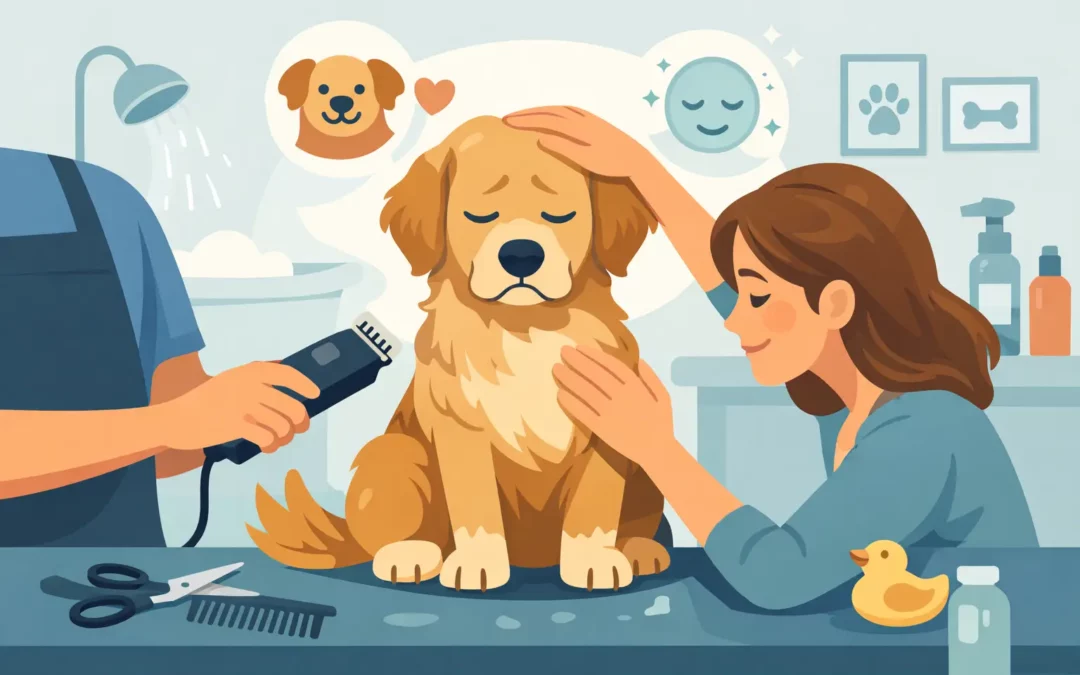
Some dogs start worrying before the car even leaves the driveway. They recognize the routine, tense up, and suddenly a simple bath or nail trim feels like a big event. If you have been wondering how to reduce dog grooming anxiety, the answer usually starts long before the appointment itself. A calmer grooming experience is built through trust, preparation, and the kind of gentle care that helps your dog feel safe at every step.
For many pet parents, anxiety around grooming can feel discouraging. You want your dog to stay clean, comfortable, and well cared for, but you also never want them to feel overwhelmed. The good news is that grooming stress is not something you simply have to accept. With the right approach, many dogs learn that grooming can be calm, predictable, and even comforting.
Why grooming anxiety happens
Dogs can feel uneasy about grooming for all kinds of reasons. Sometimes it is tied to noise, like clippers or dryers. Sometimes it is the sensation of water, brushing, paw handling, or being in a new space with unfamiliar smells. In other cases, the anxiety comes from a past experience that felt too fast, too rough, or simply too unfamiliar.
Age and temperament matter too. Puppies may be nervous because everything is new. Older dogs may have more physical sensitivity, especially around joints, nails, or matted areas. Some breeds are naturally more touch-sensitive, and some dogs are simply more cautious by personality. That is why comfort-first grooming works so well – it makes room for the individual dog instead of forcing every pet through the exact same pace.
When anxiety is ignored, grooming can become more difficult over time. A dog that panics during brushing may start resisting as soon as the brush comes out. A dog that struggles through nail trims may become fearful of anyone touching their feet. On the other hand, when a dog is handled gently and consistently, trust tends to build with each visit.
How to reduce dog grooming anxiety at home
The best grooming appointments usually begin with small, positive moments at home. If your dog only experiences brushing, face handling, or paw touching during a stressful session, those sensations can start to feel like warnings. Gentle practice between appointments changes that pattern.
Start with short sessions and keep the mood light. Touch your dog’s paws for a second, offer praise, then stop. Brush one small area, reward, and move on with your day. Lift an ear, wipe around the face, or briefly handle the collar and chest while speaking in a calm voice. These tiny repetitions help your dog understand that being handled does not automatically mean discomfort.
Timing matters. If your dog is already overstimulated, hungry, or full of pent-up energy, grooming practice may be harder. A short walk beforehand can help some dogs settle. Others do better after a quiet rest. It depends on your pet’s personality, which is why observing their body language is so valuable.
Keep your expectations realistic. A dog that fears nail trims may not be ready for a full trim after one week of practice. Progress often looks modest at first – less pulling away, less panting, more willingness to stay still. Those are meaningful wins, and they create the foundation for easier grooming later.
Make the routine feel predictable
Dogs tend to relax when life feels understandable. A predictable rhythm around grooming can reduce the fear of surprises. That can mean using the same travel routine, bringing your dog in at a quieter time of day, or keeping your own tone calm and steady before the appointment.
Your dog notices your energy. If you sound rushed, apologetic, or nervous, they can pick up on that tension quickly. A warm, reassuring attitude helps more than many owners realize. Calm does not need to be dramatic. It simply needs to be consistent.
Familiar comforts can also help. For some dogs, that means a favorite blanket in the car. For others, it means arriving with enough time so they are not being hurried from one place to another. Little details make a difference when your goal is to create a sense of safety rather than just get through the appointment.
Choose a comfort-first grooming experience
One of the most important parts of how to reduce dog grooming anxiety is choosing a groomer who sees emotional comfort as part of quality care. Technique matters, of course, but so does patience. A beautiful result is only part of the experience. The way your dog feels during the process matters just as much.
A comfort-first salon pays attention to pace, handling, and the individual needs of the pet. That may mean allowing a nervous dog time to settle before beginning. It may mean taking extra care around sensitive paws, a guarded face, or a heavily tangled coat. It may also mean using pet-safe products, gentle touch, and a quieter, more personalized approach.
Not every anxious dog needs the exact same solution. Some do better with more frequent appointments so coat maintenance stays simple and comfortable. Others benefit from shorter visits focused on just a few services at a time. A dog who dreads full grooming may cope well with a bath and brush one visit, then a face trim and nail care on another. The right plan depends on what your dog finds hardest and how quickly they recover from stress.
For local pet parents who want that kind of individualized attention, Jolis Grooming is built around a calm, personalized experience that helps dogs feel cared for, not rushed. That difference can mean a lot for pets who need a gentler path toward confidence.
Watch for the small signs of stress
Many dogs do not show anxiety in dramatic ways at first. They may lick their lips, yawn, lean away, freeze, tremble, or keep looking for the exit. Those subtle signals are worth noticing. They tell you when your dog is approaching their limit.
This is where a slower approach matters. If a dog is showing mild stress, a short pause, softer handling, or a reset can prevent that stress from escalating. If those signs are missed, the dog may move from uneasy to fully panicked. Once that happens, learning becomes harder and trust can take longer to rebuild.
It is also important to separate anxiety from discomfort. A dog who resists brushing may be frightened, but they may also be dealing with mats that pull at the skin. A dog who hates paw handling may be anxious, or they may have tender nails or irritated paw pads. Good grooming care looks at both emotional and physical comfort together.
Keep coat and nail care manageable
Sometimes the most effective way to reduce grooming anxiety is to prevent the appointment from becoming physically uncomfortable. When coats get heavily matted, brushing and trimming take longer and can feel much more intense. When nails are overgrown, paw handling can be more sensitive. Regular maintenance supports emotional ease because the process stays gentler.
That does not mean every dog needs an elaborate routine at home. It means consistency matters more than perfection. A few minutes of brushing several times a week is often easier on your dog than one long detangling session after weeks of buildup. The same idea applies to paw care, face cleaning, and routine baths.
If your schedule is full, regular professional grooming can take pressure off both you and your dog. Staying on a dependable schedule usually means shorter, smoother appointments and a dog who becomes more familiar with the process over time.
Give nervous dogs time to build confidence
Some dogs improve quickly. Others need a longer runway. That is normal. The goal is not to create a dog who loves every part of grooming overnight. The goal is to help your dog feel safer, more supported, and less overwhelmed each time.
Confidence often grows through repetition paired with positive handling. A dog who once fought paw trims may eventually tolerate them calmly. A puppy who squirms through brushing may grow into an adult dog who stands comfortably for coat care. Those changes rarely happen through force. They happen through patience, trust, and experiences that stay as positive as possible.
If your dog has severe anxiety, honesty helps. Tell your groomer what triggers your pet, what has gone badly before, and what seems to help. That information allows the experience to be tailored with more care. Personalized grooming is not a luxury for anxious dogs. It is often the reason they are able to make progress at all.
When your dog is treated with warmth, patience, and respect, grooming starts to feel less like something to endure and more like part of being well cared for. That shift may happen gradually, but it is worth every gentle step.