
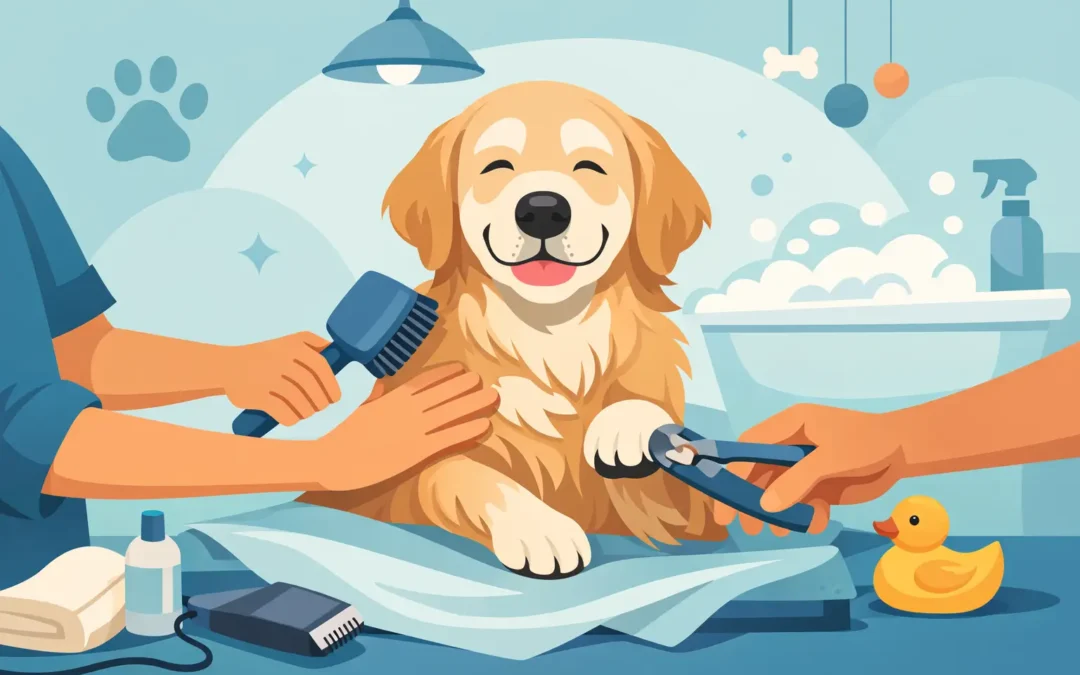
A once-easy grooming day can feel very different for an older dog. Stiff joints, thinning skin, reduced hearing, or a little extra anxiety can turn standing in a tub or having paws handled into a tiring experience. The best senior dog grooming comfort tips begin with a simple promise: your dog does not have to rush, endure discomfort, or act brave to receive the care they deserve.
As dogs age, grooming remains part of their health and happiness. A clean coat, trimmed nails, comfortable paws, and a clear view around the eyes can make daily life feel better. The difference is in how that care is delivered. Thoughtful pacing and gentle, individualized attention help senior pets feel safe from the moment they arrive until they head home.
Senior Dog Grooming Comfort Tips That Make a Difference
Senior grooming is not about making a dog look younger. It is about preserving the comfort, dignity, and polished feeling that lets them enjoy their golden years. What works best depends on your pet’s mobility, coat type, medical history, and temperament, but a few comfort-first practices are especially helpful.
Schedule around your dog’s best time of day
Many senior dogs are more comfortable after they have had time to wake up, stretch, eat, and take a relaxed potty break. Others have their brightest, calmest moments earlier in the day before fatigue sets in. Consider when your dog is usually most settled at home, then choose an appointment time that supports that rhythm.
Try to avoid adding unnecessary excitement before the visit. A quiet car ride, a familiar blanket, and a few calm minutes before entering can set a gentler tone than a rushed arrival after a busy outing. If your dog takes medication, follow your veterinarian’s guidance and let the groomer know about any timing considerations that may affect their comfort.
Share the changes you see at home
You know your dog better than anyone. Mention if they hesitate on stairs, dislike having one leg lifted, startle when approached from behind, have trouble hearing, or seem sensitive around a particular area. Even small details help a groomer adapt handling, positioning, and the pace of the appointment.
Let the grooming team know about diagnosed arthritis, skin conditions, vision changes, lumps, dental sensitivity, or past injuries. This is not about making the appointment complicated. It is about creating a more personalized experience, so your dog is not asked to move or stand in ways that leave them sore or frightened.
A professional groomer can work with the information you provide, but grooming should never replace veterinary care. If your dog suddenly reacts to touch, develops a new odor, has irritated skin, or seems unusually painful, a veterinary check is the right next step before scheduling cosmetic services.
Keep the appointment calm and unhurried
Older pets often need more breaks. A slower pace allows time to shift positions, sit down, drink water, and reset after a noisy dryer or a period of brushing. A shorter, more focused visit may be kinder than trying to complete every possible service in one long session.
There is a trade-off here: maintaining a manageable coat at home and booking regular appointments can reduce the need for lengthy, intensive grooming later. Mats, packed undercoat, and overgrown nails can be uncomfortable to address, especially for a dog with tender skin or limited mobility. Gentle maintenance is usually far easier on a senior dog than an occasional major makeover.
Make standing and bathing easier on aging joints
Slippery surfaces and long periods of standing can be especially challenging for older dogs. Secure footing, supportive handling, and frequent opportunities to change position can help a pet feel more stable. Some dogs are most comfortable with a quick bath and careful towel drying, while others tolerate a low-heat, low-noise drying process when it is introduced patiently.
Warm water can feel soothing, but it should never be too hot, especially for dogs with sensitive skin. Pet-safe shampoos and conditioners should be chosen with the coat and skin in mind. A senior with dry, flaky skin may need a different approach than a dog with a dense coat that needs regular deshedding.
At home, place non-slip mats near areas where your dog is brushed, bathed, or towel-dried. If they are no longer comfortable jumping into the car, a ramp or steady assistance can make the trip to their grooming visit feel much less demanding.
Give sensitive areas extra patience
Paws, nails, ears, faces, and rear areas often become more sensitive with age. Overgrown nails can change how a dog bears weight, while excess hair around the eyes may make it harder for a senior with declining vision to navigate confidently. Gentle face trims and regular paw care can improve comfort without asking too much of your pet at once.
Teeth cleaning can also be a welcome part of a polished grooming routine, but senior mouths can be tender. A groomer should know if your dog has dental disease, loose teeth, or discomfort around the muzzle. Visible tartar, bleeding gums, persistent bad breath, or trouble eating deserve veterinary attention rather than a cosmetic solution.
For dogs with long or curly coats, keep an eye on friction-prone spots such as behind the ears, under the collar, in the armpits, and around the hindquarters. Regular, gentle brushing prevents painful pulling and gives you a chance to notice changes in the skin or coat early.
Use familiar cues and calm reassurance
A dog who cannot hear as well may be startled by unexpected touch. Approach where they can see you, use a soft visual cue, and offer a reassuring hand before handling them. A dog with reduced vision benefits from the same courtesy: speak gently, move predictably, and avoid sudden changes in position.
You can help by practicing small grooming moments at home. Briefly touch a paw, reward calm behavior, then stop. Brush for a minute or two, praise your dog, and let them rest. These positive, low-pressure sessions build trust far better than trying to force a full grooming routine when your pet is already uncomfortable.
A familiar scent can be comforting, too. Ask whether it is appropriate to bring a small blanket or towel from home. The right choice depends on the salon’s policies and your dog’s habits, but familiar items can help some seniors settle more easily in a new environment.
Choosing a Comfort-First Grooming Experience
Not every senior dog needs the same grooming schedule or package. A short-haired dog may need regular baths, nail and paw attention, and a light brush-out. A long-coated companion may benefit from more frequent maintenance to prevent tangles and keep their skin comfortable. Dogs with mobility concerns may do best with simpler appointments spaced closer together rather than one extensive session.
The most valuable thing a pet parent can choose is a groomer who listens. Look for a welcoming environment where your dog’s needs are discussed before services begin, not treated as an afterthought. A comfort-first professional will be honest about what your dog can reasonably tolerate that day and may recommend breaking services into smaller visits when needed.
At Jolis Grooming, every appointment is an opportunity to make your pet feel cared for, not hurried. Gentle handling, pet-safe products, and thoughtful attention to each dog’s comfort can help senior companions leave looking refreshed and feeling more like themselves.
Between-Appointments Care for Senior Dogs
A little home care can make grooming visits easier and more pleasant. Check nails regularly, brush lightly before tangles build, wipe paws after messy walks, and keep the hair around the eyes clear enough for comfortable vision. Small routines are often easier for senior dogs than waiting until a problem becomes difficult to manage.
Watch for changes in behavior during these moments. A dog who used to enjoy brushing but now pulls away may be communicating pain, skin irritation, or anxiety. Respect that message. Pause, stay gentle, and ask your veterinarian or grooming professional for guidance that fits your pet’s individual needs.
Your senior dog has spent years offering steady companionship, joyful greetings, and a place in the heart of your home. Giving them a calm, comfortable grooming routine is one tender way to return that devotion, helping them feel clean, confident, and deeply cared for at every age.