
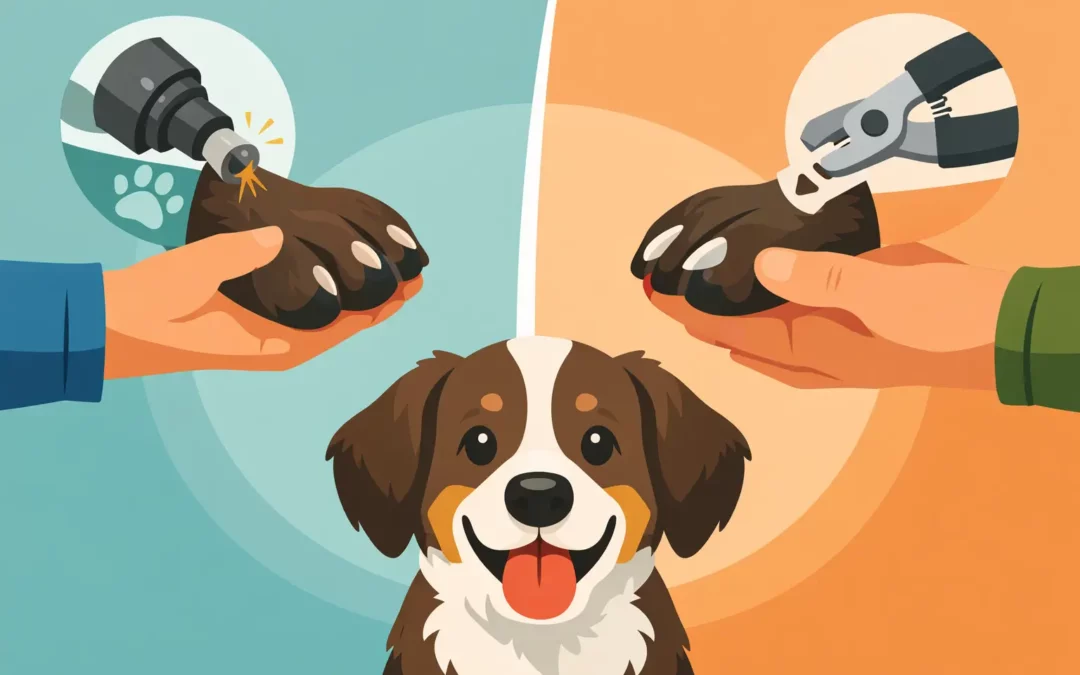
A dog’s nails can turn an ordinary walk, cuddle, or jump onto the couch into an uncomfortable experience when they grow too long. For loving pet parents, nail grinding versus nail clipping is not simply a grooming preference. It is a question of what will keep their dog calm, comfortable, and confidently moving through daily life.
Both methods can be safe, effective ways to maintain healthy paws when performed with patience and the right technique. The better choice often comes down to your dog’s nail type, temperament, past grooming experiences, and tolerance for sound and handling. A thoughtful groomer does not force one approach on every pet. They pay attention to the dog in front of them.
Why regular nail care matters for your dog
Long nails can affect more than a polished appearance. When nails touch the ground or begin clicking loudly across hard floors, they may change the way a dog stands and walks. Over time, that can place extra pressure on the toes and paws. Curled nails may also grow toward the paw pad, creating painful irritation that deserves prompt professional attention.
Regular trimming helps support comfortable movement, cleaner paws, and better traction around the home. It also gives a groomer the chance to look closely at the paw pads, nails, and spaces between the toes. For dogs who spend time outdoors in Central Florida, this kind of gentle, routine care can be especially welcome after walks on warm pavement, grass, and sandy paths.
The ideal schedule varies. Many dogs benefit from nail maintenance every three to six weeks, while active dogs that naturally wear their nails down may need less frequent attention. Small dogs, seniors, and pets who mostly walk on soft surfaces often need more consistent trims.
Nail grinding versus nail clipping: the real difference
Nail clipping uses a specialized tool to remove the tip of the nail in small sections. It is quick, quiet, and familiar to many dogs. A skilled groomer can make careful trims efficiently, which is helpful for pets who prefer a shorter appointment and do well with paw handling.
Nail grinding uses a rotating, pet-safe file to gradually smooth the nail down. Rather than making one clear cut, the groomer gently shapes the nail a little at a time. This can create a rounded finish that is less likely to feel sharp against floors, furniture, or your skin during enthusiastic greetings.
Neither option is automatically kinder or better. The right fit depends on the individual dog. Some pets dislike the pressure and quick motion of clippers but accept a grinder once they become comfortable with the sound. Others find the vibration of a grinder unsettling and relax more easily with a swift clip. Comfort should always guide the service.
The benefits of nail clipping
Clipping is often the most efficient choice for dogs with relaxed, cooperative temperaments. It does not involve motor noise or vibration, which can make a meaningful difference for sound-sensitive pets. It is also useful when a dog needs only a light trim or has nails that are already maintained on a reliable schedule.
When done properly, clipping can be precise and straightforward. Professional groomers trim conservatively, checking the nail as they go rather than taking off too much at once. This careful approach is especially valuable for dogs with dark nails, where the quick is harder to see.
There are trade-offs. Clippers can leave a sharper edge, and a nervous dog may react to the sensation of the nail being trimmed. If a nail is cut too short, it can reach the quick, the sensitive blood vessel and nerve inside the nail. That is why calm handling and professional judgment matter far more than speed.
The benefits of nail grinding
Grinding is beloved by many pet parents because it can leave nails smooth and softly rounded. It can also allow a groomer to remove small amounts gradually, helping them work carefully around the quick. For dogs with thick, tough nails, a grinder may make it easier to refine the shape after an initial trim.
This method is often a lovely option for pets whose nails catch on blankets or who tend to scratch accidentally during play. The smooth finish can feel more polished, and it is a natural complement to a pampering paw-care appointment.
Still, grinding takes a little longer and requires the dog to tolerate the sound, vibration, and warmth that can develop if the tool stays in one place too long. A considerate groomer uses brief, controlled passes and gives the dog breaks when needed. The goal is never to rush through discomfort for the sake of a perfectly smooth nail.
Which option is best for your dog?
Your dog’s response tells the most important story. A confident puppy who is still learning grooming manners may do best with short, positive introductions to either tool. An older dog with arthritis may need extra support, gentle positioning, and a method that keeps handling brief. A rescue dog with an unknown grooming history may need time to build trust before either service feels easy.
Nail color matters, too. Clear nails make the quick easier to identify, while dark nails require especially cautious, incremental work. Dogs with overgrown nails may need several appointments to gradually encourage the quick to recede. Trying to take everything off in one visit can be uncomfortable and increases the chance of cutting too close.
The best nail service may even be a combination. A groomer might carefully clip the excess length, then use a grinder to soften the edges. For another dog, grinding alone may be the calmest path. There is no prize for choosing one method over the other. There is only the reward of a dog who leaves with comfortable paws and a positive association with care.
Signs your dog may need a nail appointment
A clicking sound on tile or hardwood is a common clue, but it is not the only one. Watch for nails that extend beyond the paw, snag on fabric, curl to the side, or make it difficult for your dog to stand naturally. You may also notice your pet licking at their paws, slipping more often indoors, or resisting having their feet touched.
Do not wait if you see a nail growing into a paw pad, bleeding, split down the center, or causing obvious pain. Those concerns may require veterinary guidance, particularly if there is swelling, limping, discharge, or signs of infection. Grooming supports wellness, but a painful or injured paw deserves appropriate medical care.
Making nail care feel less stressful
The experience around the service matters as much as the tool itself. Dogs tend to feel safer when their paws are handled gently, their body is supported, and the person caring for them responds to their signals. A few moments of reassurance can change the entire appointment.
At home, you can help by touching your dog’s paws briefly during calm moments and pairing that handling with praise. Let them hear a grinder from across the room before bringing it near their feet, if that is the method they will receive. Keep practice short and cheerful. Forcing a fearful dog through nail care can make the next visit harder.
A professional grooming setting gives many pets the benefit of practiced handling, proper tools, and a calm routine. At Jolis Grooming, nail and paw care is approached as part of your dog’s comfort, not as an afterthought at the end of an appointment. Each pet deserves patient attention, whether they need a quick clip, a smooth grind, or a little extra reassurance along the way.
Healthy nails help your dog move, play, stretch, and settle in close without discomfort. When it is time for their next paw-care visit, choose the method that respects their personality and lets them leave feeling cared for from nose to tail.