
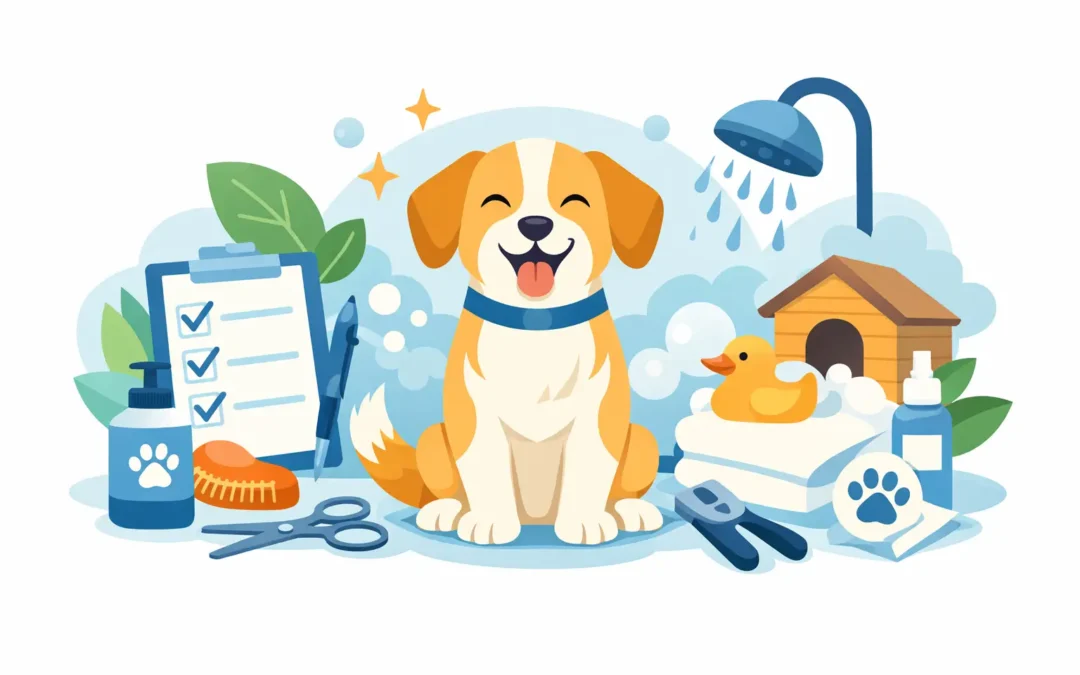
A soft, freshly brushed coat feels wonderful, but the real value of regular grooming is often found in the little details: the clean ears, comfortable paws, trimmed nails, and bright smile that help your dog feel like themselves. This dog grooming hygiene checklist helps loving pet parents stay ahead of common comfort concerns between professional appointments, without turning care time into a stressful chore.
Every dog has different needs. A short-haired dog who spends most days indoors may need a lighter routine than a doodle who loves a muddy backyard, while a senior dog may need extra patience around sensitive joints and paws. The goal is not perfection. It is a calm, consistent rhythm of care that keeps your companion clean, comfortable, and happily pampered.
Your Dog Grooming Hygiene Checklist
Start with the coat and skin
A healthy coat begins with regular brushing. For many dogs, this is also a sweet moment of connection: a few quiet minutes of gentle attention after a walk or before bedtime. Brushing removes loose hair, lifts everyday dirt, distributes natural oils, and gives you a chance to notice changes that might otherwise stay hidden beneath the fur.
Run your hands gently along your dog’s body as you brush. Watch for tangles, dryness, flakes, bumps, redness, or areas your pet suddenly dislikes having touched. Small mats can become tight and uncomfortable surprisingly quickly, especially behind the ears, under the collar, in the armpits, around the tail, and along the legs.
How often you brush depends on coat type. Smooth-coated dogs may only need a quick weekly brush, while curly, double-coated, or long-haired dogs often benefit from brushing several times a week or even daily. If a mat is close to the skin, avoid pulling or attempting to cut it out at home. Scissors near loose skin can lead to painful accidents. A professional groomer can assess the coat and remove tangles safely with the right tools and a gentle approach.
Bathing matters, too, but more is not always better. Overbathing can leave some dogs dry or itchy, particularly when the wrong shampoo is used. Use pet-safe products and choose a bath schedule suited to your dog’s coat, lifestyle, skin, and veterinarian’s guidance. Always rinse thoroughly. Leftover product can irritate the skin, even after an otherwise lovely bath.
Check ears with a light touch
Healthy ears should not have a strong odor, heavy buildup, discharge, or obvious redness. Once a week, lift each ear flap and take a quick look. This simple habit is especially helpful for floppy-eared breeds, frequent swimmers, and dogs with thick hair around the ears.
Clean only as directed by your veterinarian, using a dog-safe ear cleanser. Never push cotton swabs down into the ear canal. Your job is to notice and maintain what is visible, not to reach deep inside the ear. Head shaking, repeated scratching, tenderness, an unpleasant smell, or dark debris can point to an issue that needs veterinary attention rather than more cleaning.
A calm ear check should be brief and rewarded with praise. If your dog pulls away, do not force the moment. Building trust over several short sessions is kinder and more productive than creating a struggle around a sensitive area.
Keep teeth and breath on the care calendar
Dental care is one of the most overlooked parts of a grooming routine, yet it can make a meaningful difference in your dog’s daily comfort. Bad breath is not simply part of being a dog. A lingering odor, visible tartar, inflamed gums, drooling, or reluctance to chew may signal that your pet needs a veterinary dental evaluation.
At home, use a dog toothbrush and dog-safe toothpaste. Human toothpaste is not appropriate for dogs. Begin slowly by letting your pet taste the toothpaste, then gently lift the lip and focus on the outside surfaces of the teeth. Even a short brushing session a few times a week is a caring step forward. Dental chews and toys may complement brushing, but they do not replace it.
Professional teeth cleaning as part of a grooming visit can help keep your pet feeling fresh and polished, but it is different from veterinary dental treatment. Deep dental cleanings, dental disease, and anesthesia-related procedures belong with your veterinarian. Knowing the difference protects your dog and helps you make confident choices.
Give nails and paws the attention they deserve
You may hear your dog’s nails clicking across the floor before you notice they have grown too long. When nails extend past a comfortable length, they can affect the way a dog stands and walks. They may also snag more easily or curl toward the paw pad in severe cases.
Check nail length every two to four weeks, though active dogs who walk frequently on pavement may wear theirs down more naturally. Dark nails and wiggly paws can make home trimming intimidating, and there is no shame in leaving this job to a trained groomer. A careful nail service protects both your dog’s comfort and your confidence.
While you are at the paws, look between the toes and pads for packed dirt, burrs, small cuts, cracked pads, swelling, or a persistent urge to lick. In Central Florida, hot pavement can be especially tough on paw pads. On warm days, test the pavement with the back of your hand before heading out. If it is too hot for you to hold comfortably, it is too hot for tender paws.
Freshen the face and sanitary areas
Eyes, facial folds, and the area around the mouth deserve routine attention, particularly for dogs with short noses, long facial hair, or light-colored coats. Use a soft, damp cloth to gently wipe away everyday tear residue or food debris. Be delicate around the eyes, and avoid scented products that could irritate sensitive skin.
A well-maintained face trim can make a remarkable difference in comfort and visibility. Hair that falls into the eyes, collects moisture around the mouth, or traps debris may leave your dog feeling bothered long before it looks untidy to you. Similarly, keeping the sanitary area clean and neatly trimmed supports hygiene after potty breaks and makes at-home care easier.
These are areas where professional grooming is especially valuable. Dogs rarely enjoy having their faces or hindquarters handled for long, and an experienced groomer knows how to work patiently, safely, and with the individual dog’s comfort in mind.
A Grooming Hygiene Checklist by Schedule
Instead of trying to handle everything at once, spread care across the week. A sustainable routine feels more relaxing for both of you.
- Daily or after outdoor play: Wipe muddy paws, check for burrs, and remove debris from the coat.
- Two to three times each week: Brush thoroughly, paying special attention to friction-prone areas where mats form.
- Weekly: Look at ears, teeth, skin, eyes, and paw pads for anything new or uncomfortable.
- Every two to four weeks: Assess nail length and schedule a trim if needed.
- As needed or on a professional schedule: Bathe, refresh the face and sanitary areas, remove undercoat, and maintain a coat length that suits your dog’s lifestyle.
A routine should flex with the season. During rainy weeks, pollen-heavy months, shedding periods, or stretches of frequent swimming, your dog may need more frequent brushing, paw cleaning, or bathing. On the other hand, a dog with sensitive skin may need a more conservative bath schedule and veterinarian-approved products.
When a Professional Grooming Visit Makes Sense
Home care and professional grooming work beautifully together. Brushing at home keeps a coat manageable, while a professional appointment provides the attentive, head-to-tail care that is difficult to recreate in a busy household. It also gives another caring set of eyes the chance to notice concerns such as matting, irritated skin, overgrown nails, or ears that appear uncomfortable.
For dogs who become anxious during grooming, the environment matters as much as the service. Gentle handling, unhurried pacing, pet-safe products, and individualized care can turn grooming from something a dog tolerates into a familiar wellness ritual. At Jolis Grooming, each visit is designed to help pets feel cared for, comfortable, and beautifully refreshed, from a soothing bath and fluff treatment to teeth cleaning, nail care, paw treatment, and a polished face trim.
If your dog is suddenly sensitive to touch, develops a rash, has a strong ear odor, limps, repeatedly licks one area, or shows signs of pain, skip the grooming fix and contact your veterinarian. Grooming supports wellness, but medical concerns deserve medical care.
The best checklist is the one your dog learns to trust. Keep sessions short, use calm praise, offer breaks, and celebrate every bit of progress. With consistent care and a compassionate professional partner when needed, your dog can enjoy the clean coat, comfortable paws, and easy confidence that come from feeling truly well cared for.