
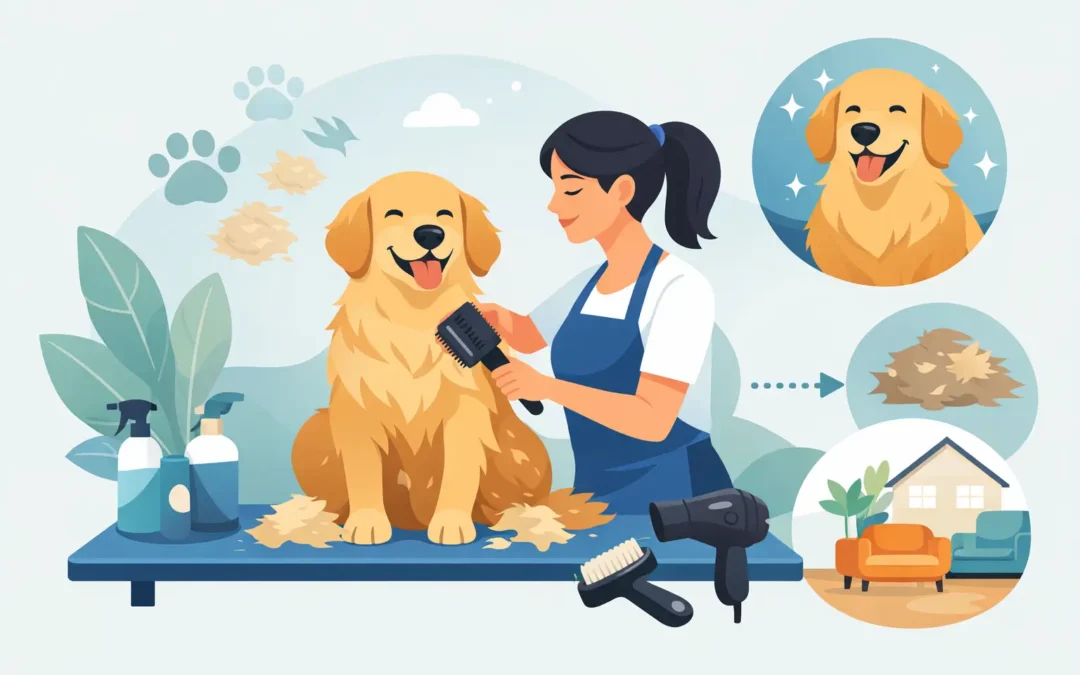
That soft tumbleweed rolling across the living room is familiar to many loving dog parents. So, can dog grooming help shedding? Yes. While grooming cannot stop a healthy dog from shedding altogether, it can dramatically reduce the amount of loose hair that ends up on your sofa, clothes, car seats, and floors.
The real benefit goes beyond a tidier home. Thoughtful, regular grooming helps your dog feel lighter, cleaner, and more comfortable in their own coat. For Longwood pet parents, it is one of the kindest ways to support both a polished appearance and everyday wellness.
Can Dog Grooming Help Shedding Without Stopping It?
Shedding is natural. Dogs lose old or damaged hairs to make room for new growth, and the amount they shed depends on their breed, coat type, health, age, hormones, and the season. In Central Florida, where warm weather and indoor air conditioning can affect the skin and coat year-round, shedding may not always follow the dramatic spring and fall pattern seen in colder climates.
Grooming works by removing hair that has already loosened before it spreads around your home. A professional brush-out, bath, and drying process can release an impressive amount of dead undercoat and surface fur in one visit. That means less hair on your furniture and fewer tangles pulling at your dog’s skin.
It is not a promise of a no-fur household. A Labrador, German Shepherd, Husky, Golden Retriever, or short-haired mixed breed will still shed because that is what their coat is designed to do. The goal is healthier shedding management, not an unnatural attempt to eliminate it.
Why Loose Fur Needs More Than a Quick Brush
A few strokes with a brush at home can be helpful, but loose fur often gets trapped deep within a dense coat. When it stays there, it can compact against the skin, mix with natural oils, and contribute to matting, odor, and irritation. This is especially common in double-coated dogs and curly or long-haired pups.
Professional grooming combines several gentle steps that work together. Brushing helps lift loose hair. A pet-safe bath washes away dirt and excess oils. Proper drying helps separate the coat so remaining loose fur can be brushed out thoroughly. A light trim around the face, feet, or sanitary areas may also make routine coat care easier between appointments.
For dogs with sensitive skin, the products and techniques matter just as much as the brush. Harsh shampoos, overly aggressive brushing, or poor drying can leave a dog uncomfortable. Personalized grooming should feel like care, not a battle with a coat.
A clean coat sheds more comfortably
Clean fur is easier to brush because it is free from buildup that makes strands cling together. After a well-matched bath and fluff-and-brush treatment, the coat can move naturally again. Your dog may still leave a few hairs behind, but those hairs are less likely to collect in dense patches or form knots close to the skin.
Brushing supports skin and coat health
Gentle brushing distributes natural oils through the coat and gives groomers a closer look at what may be happening underneath all that fur. Dryness, flaky skin, redness, fleas, ticks, bumps, or areas of thinning hair can be easier to notice during a grooming appointment.
A groomer cannot diagnose a medical condition, but a caring professional can help flag changes worth discussing with your veterinarian. That early attention can make a meaningful difference for your pet’s comfort.
The Best Grooming Schedule Depends on Your Dog
There is no single perfect schedule for every dog. A sleek, short-haired Beagle may need a bath and de-shedding brush-out less often than a thick-coated Australian Shepherd. A Poodle mix may shed less visibly but require more frequent grooming to prevent mats. Senior dogs, puppies, and anxious pets may also benefit from appointments paced around their comfort level.
As a general starting point, many moderate to heavy shedders do well with professional grooming every four to eight weeks. Regular visits prevent loose undercoat from building up and let your dog become familiar with the grooming routine. A calm, predictable experience is often easier than waiting until the coat is heavily impacted or tangled.
At home, a brief brushing session once or twice a week can extend the benefits of professional care. Heavy seasonal shedders may need more frequent brushing during periods when the undercoat is releasing. Keep those sessions short, gentle, and positive. A favorite treat, quiet praise, and a comfortable spot can turn coat care into bonding time.
What Not to Do When Your Dog Is Shedding Heavily
When fur seems to be everywhere, it can be tempting to reach for quick fixes. Some, however, can create bigger problems for the coat.
Do not shave a double-coated dog simply because they shed. Breeds with protective double coats rely on those layers for insulation and skin protection. Shaving may change how the coat grows back and does not solve the underlying shedding cycle. It should only be considered under professional guidance for a specific grooming or veterinary reason.
Avoid brushing so hard that your dog flinches, pulls away, or develops brush burn. The right tool and technique depend on whether your dog has a smooth, curly, wiry, single, or double coat. More pressure is not better.
Also, resist bathing too often with random household or human shampoos. Dogs have different skin needs, and frequent washing with unsuitable products can strip oils and worsen dryness. A fresh-smelling coat should also be a comfortable, well-cared-for coat.
When Excessive Shedding Deserves a Veterinary Call
Normal shedding looks like a gradual release of fur across the body. A sudden change deserves more attention. If you notice bald patches, sores, intense scratching, dandruff, redness, greasy skin, a strong odor, or a dramatic increase in hair loss, contact your veterinarian.
Changes in appetite, energy, weight, or behavior alongside coat loss are also worth mentioning. Allergies, parasites, skin infections, nutrition concerns, stress, and other health issues can affect the coat. Grooming is a wonderful support for coat condition, but it is not a substitute for veterinary care when something seems wrong.
Make Shedding Season Feel More Manageable
The most effective plan is simple: consistent professional grooming paired with gentle maintenance at home. Keep your dog’s bedding clean, vacuum the places they love to nap, and use a brush suited to their coat rather than choosing one based on appearance alone. Most of all, pay attention to how your dog responds. A relaxed dog is more likely to enjoy regular care and let you reach the areas where loose fur tends to collect.
At Jolis Grooming, every appointment is an opportunity to give your pup unhurried, comfort-first attention. A soothing bath, careful brush-out, face trim, nail and paw care, and individualized handling can help your dog leave feeling fresh, pampered, and beautifully cared for.
Shedding may be part of life with a beloved dog, but it does not have to take over your home or leave your pet feeling itchy and weighed down. A consistent grooming routine gives you more cuddle time, fewer fur-covered chores, and a happier companion who feels as special as they are.