
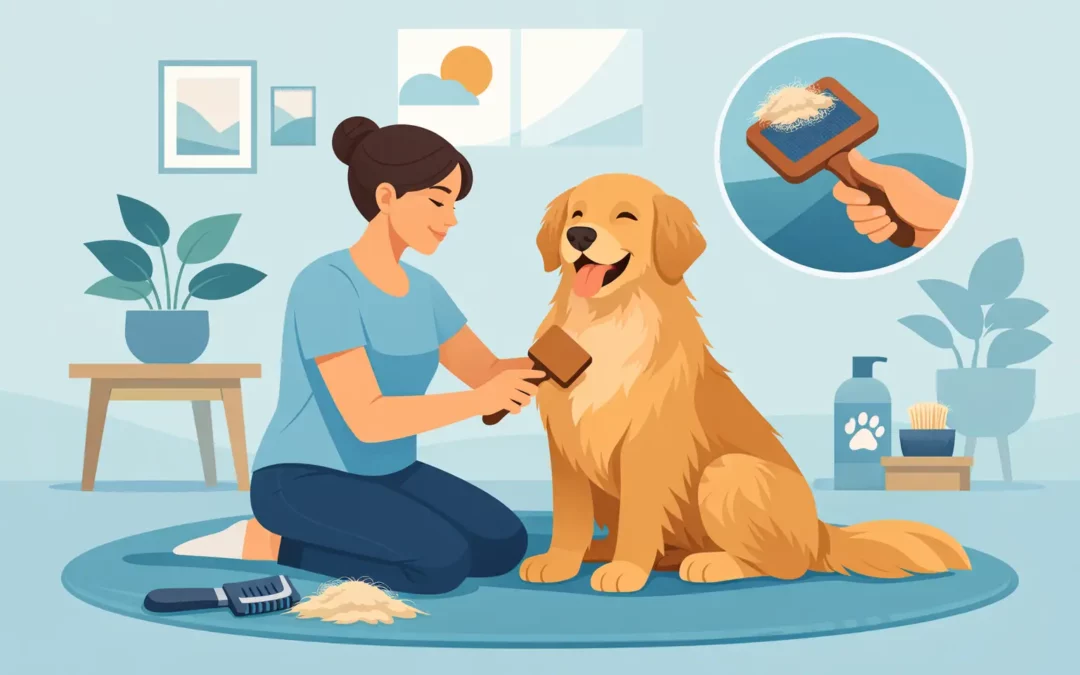
A silky coat is lovely, but the real value of regular brushing is what your dog feels: lighter, cleaner, more comfortable, and cared for. This guide to dog coat brushing is designed to help pet parents turn a necessary task into a gentle routine that supports healthy skin, a polished appearance, and peaceful time together.
Brushing is not one-size-fits-all. A Labrador who sheds on the sofa needs a different approach than a curly-coated Poodle, a fluffy double-coated Husky, or a small dog with fine, silky hair. The best routine is the one that respects your pet’s coat, comfort level, and individual needs.
Why Brushing Is a Comfort Care Essential
Loose hair does more than collect on furniture. When it stays trapped in the coat, it can contribute to tangles, compacted undercoat, and poor air circulation near the skin. Mats can pull with every step, especially behind the ears, under the collar, in the armpits, around the tail, and between the back legs. What looks like a small knot can become surprisingly uncomfortable.
Thoughtful brushing also gives you a regular opportunity to notice changes. You may spot dry skin, flakes, irritated areas, bumps, fleas, or tenderness before they become easy to miss beneath the fur. If you see a wound, swelling, unusual odor, or a skin concern that persists, pause the grooming and contact your veterinarian.
For many dogs, the emotional benefit matters just as much. A calm brushing session can build trust when it is handled with patience, soft touch, and plenty of breaks. Your dog learns that being cared for does not have to mean being rushed, restrained, or uncomfortable.
Your Guide to Dog Coat Brushing Tools
The right brush should glide through the coat without scraping, tugging, or causing your dog to flinch. You do not need a crowded grooming drawer, but selecting tools for your dog’s coat type makes every session kinder and more effective.
A soft bristle brush works beautifully for short, smooth coats. It lifts surface dust, distributes natural oils, and adds a healthy shine. Rubber curry brushes or grooming mitts can also be a comfortable choice for short-haired dogs, especially during shedding season.
For medium or longer coats, a slicker brush can help separate the hair and remove loose fur. Choose one with flexible pins and use light pressure. A metal comb is valuable for checking your work because it can find small tangles that a brush may glide over. For thick double coats, an undercoat rake or de-shedding tool may be helpful, but it should be used carefully and only as needed. Overusing a harsh shedding tool can irritate skin or damage the protective coat.
Curly, wavy, and continuously growing coats often benefit from a slicker brush followed by a comb. These coats can mat close to the skin even when the top layer looks fluffy and tidy. If you cannot comfortably get a comb through the coat, a professional groomer can help before the matting becomes painful.
Start With a Calm Setup
Where you brush can shape the entire experience. Choose a quiet room with good lighting and a nonslip surface. A towel or grooming mat can help a small dog feel secure on a table, while larger dogs may be most relaxed on the floor. Avoid beginning right after an exciting walk, during family bustle, or when your pet is already tired of being handled.
Let your dog inspect the brush first. Offer gentle praise, a favorite small treat, or a few calm strokes with your hand. Start with an easy area, such as the shoulder or back, rather than reaching immediately for sensitive places like the feet, belly, or tail.
Short sessions are perfectly worthwhile. A three-minute positive experience several times a week is often better than one long session that leaves your dog anxious. If your pet turns away, stiffens, lip-licks repeatedly, growls, or tries to escape, take that communication seriously. Stop, reset, and try again later with a softer approach.
How to Brush Without Pulling
Begin by running your fingers through the coat. This gentle check helps you locate tangles before a brush catches on them. Work in small sections, brushing in the direction the hair grows. On longer coats, use line brushing: hold a small layer of hair up, brush the hair beneath it from the ends toward the roots, then move gradually upward. This technique reaches the coat near the skin without pulling through a large section all at once.
When you find a knot, do not force it. Hold the hair at the base, close to the skin, to reduce tugging. Then use your fingers or the end of a comb to gently loosen the outer edges of the tangle. A pet-safe detangling spray may help, but never spray close to your dog’s eyes or face. If the knot is tight, flat against the skin, or causing discomfort, it is time to call a professional.
Never cut a mat out with household scissors. Skin can be pulled into a mat and is much easier to nick than many pet parents realize. Professional groomers use specialized tools, training, and careful handling to address difficult areas safely.
Pay special attention to the places where friction creates tangles fastest: behind the ears, under harness straps, around the collar, beneath the front legs, feathering on the legs, and the rear. A quick comb-through in these spots between full brushing sessions can prevent a small problem from turning into a major one.
Brushing Sensitive Areas
The face, paws, tail, and sanitary areas call for extra patience. Use a small comb or a soft brush around the face, always moving away from the eyes. Do not pull at dried discharge near the eyes. A damp, soft cloth may be a more comfortable first step.
For paws, handle one foot at a time and keep the session brief. Some dogs need time to feel safe with their feet being touched, especially if nail trims have been stressful in the past. Gentle praise and gradual practice can make a meaningful difference.
Match the Schedule to the Coat
Short-coated dogs often do well with a quick brush once or twice a week, though more frequent brushing can be welcome during seasonal shedding. Medium and long coats usually need attention several times a week. Curly and dense coats may need daily combing, particularly if your dog wears a harness, enjoys swimming, or loves rolling through Central Florida’s humid grass and sandy paths.
Bathing changes the equation. A clean, fully dried coat is generally easier to brush, while brushing a wet, tangled coat can tighten knots. After a bath, dry thoroughly according to your dog’s coat needs before doing a complete brush-out. Dogs with double coats should never be shaved simply to manage shedding or Florida heat without veterinary or grooming guidance. Their coat plays a role in insulation and skin protection, and the right maintenance plan depends on the dog.
When Home Care Needs a Professional Touch
At-home brushing keeps your pet comfortable between appointments, but professional grooming provides a deeper level of coat and skin care. This is especially true for dogs with dense undercoats, long hair, curly coats, recurring matting, or a strong dislike of being brushed in certain areas.
A comfort-first grooming appointment can include a thorough brush and fluff treatment, a gentle bath with pet-safe products, careful face trimming, nail and paw attention, and a polished finish tailored to your dog. At Jolis Grooming, each pet is treated as an individual, with patient handling and personalized care designed to make grooming feel reassuring rather than overwhelming.
Do not wait for a coat to become severely tangled before booking. Early help is usually more comfortable for your dog and gives the groomer more options for preserving coat length where appropriate. Bring up any sensitivities, past grooming stress, skin concerns, or areas your dog dislikes being handled so the visit can be shaped around their needs.
A brush, a few quiet minutes, and a gentle hand can tell your dog something wonderful: you notice the little things that affect their comfort. Keep the routine simple, celebrate small progress, and seek caring professional support whenever your best friend needs a little extra pampering.