
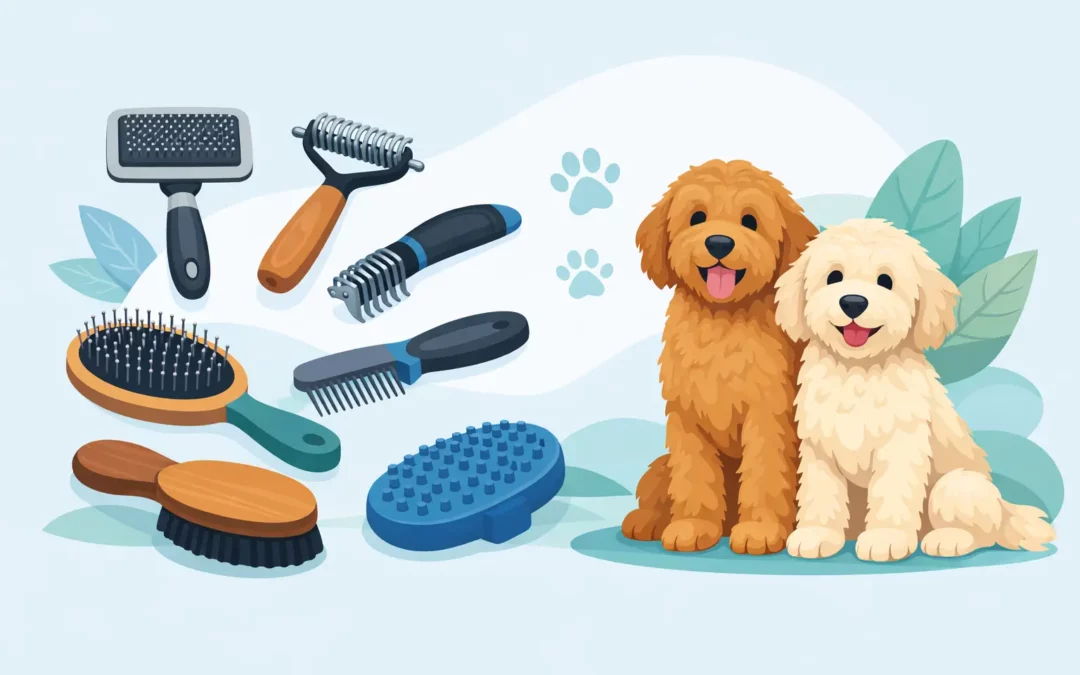
A doodle coat can look beautifully soft one day and turn into a tangle trap the next. That is why finding the best brushes for doodle coats matters so much. The right brush does more than keep your dog looking fluffy – it helps prevent painful mats, supports healthy skin, and makes home grooming feel calmer for both of you.
Doodles are loved for their teddy-bear look, but their coats are rarely low-maintenance. Depending on your dog’s mix, the texture may be loose and wavy, tightly curled, dense, fine, or a combination of all three. That variation is exactly why one brush is almost never enough. If you have been wondering which tools are actually worth keeping in your grooming drawer, the answer usually starts with understanding what each brush does best.
What makes doodle coats so tricky
Most doodles have coats that hold onto loose hair instead of shedding it cleanly onto the floor. That sounds nice until the trapped hair starts wrapping itself around curls and wave patterns. Add a little moisture, friction from a harness, or a few days of missed brushing, and small snags can turn into dense mats surprisingly fast.
The areas that usually get into trouble first are behind the ears, under the collar, under the legs, around the tail, and where the body rubs against itself. A soft-looking coat can hide serious tangles close to the skin, so surface brushing is only part of the job. The best grooming tools are the ones that help you brush all the way through gently and consistently.
Best brushes for doodle coats at home
Slicker brush
If most doodle owners keep one brush within reach, it is a slicker brush. This is often the foundation of an effective home routine because it helps separate the coat, lift trapped hair, and work through small tangles before they turn into mats.
A quality slicker brush has fine pins that move through the coat without scraping the skin when used correctly. For doodles, a long-pin slicker is often the most useful choice because it reaches deeper into thicker, denser coats. It is especially helpful after a bath and blow dry, when the coat is fluffy and ready to be brushed through section by section.
That said, slicker brushes are not one-size-fits-all. Some are quite firm, which can be uncomfortable if your dog has sensitive skin or if you tend to press too hard. A softer slicker can feel gentler, but it may not do enough for a heavy curly coat. It depends on your dog’s texture, coat length, and tolerance.
Steel greyhound comb
A steel comb is not always the brush people get excited about, but it is one of the most valuable finishing tools you can own. After using a slicker brush, the comb tells you whether you actually got through the coat. If the comb catches, there is still a tangle there.
For doodle coats, a comb with both wider and finer teeth is especially useful. The wider side helps check fluffier areas, while the finer side is helpful around the face, ears, feet, and any place where tangles like to hide. If your brush glides over the top but the comb cannot pass through to the skin, the coat still needs more attention.
This is where many home brushing routines fall short. The coat may look neat on the outside while mats are forming underneath. A comb gives you a more honest picture.
Pin brush
A pin brush can be a lovely option for doodles with looser waves, finer coats, or freshly maintained trims that do not need heavy detangling. It tends to feel softer and more comfortable than a slicker, which can make it a nice choice for dogs who are nervous about grooming.
It is not usually the strongest tool for deeper tangles, so it works best as part of a routine rather than as your only brush. Think of it as a gentle maintenance tool. If your doodle’s coat is kept shorter and you brush often, a pin brush may be enough on some days.
For long, dense, or very curly coats, though, a pin brush alone usually will not keep up. It feels pleasant, but comfort has to be balanced with effectiveness.
Dematting tool
A dematting tool can help break apart stubborn knots, especially in friction areas like the armpits or behind the ears. Used carefully, it may save some coat and reduce how much needs to be clipped away.
This is one of those tools that comes with a real caution. Dematting blades are sharp, and overusing them can thin the coat unevenly or irritate the skin. They should never be used aggressively or as a replacement for regular brushing. If a mat is tight to the skin, trying to work it out at home can be uncomfortable and sometimes unsafe.
For mild tangles, a dematting tool can be useful in experienced hands. For heavy matting, professional grooming is the kinder route.
Deshedding brush
This one surprises some doodle owners. While certain doodles do have undercoat influence depending on the mix, most do not need a traditional deshedding tool in the same way a double-coated breed would. In fact, using a heavy deshedding tool on the wrong doodle coat can cause breakage or unnecessary coat damage.
If your doodle has a fleece or wool-like coat, skip this category unless a groomer has specifically recommended something for your dog’s coat type. A slicker and comb are usually far more useful.
The brush combination that works best for most doodles
If you want the simplest answer to the best brushes for doodle coats, it is usually this: a long-pin slicker brush and a steel comb. That pair covers what most doodle owners need between grooming appointments.
The slicker does the active brushing. The comb confirms that the coat is fully detangled from the surface down to the skin. If your dog is sensitive, a pin brush can be added for gentler maintenance days, but the slicker-and-comb combination is the dependable core.
How to brush without making it stressful
The best brush in the world will not help much if every session feels like a wrestling match. Doodles tend to do best when brushing is calm, frequent, and paired with reassurance.
Start with short sessions instead of trying to do a full-body groom all at once. Choose a time when your dog is relaxed, not bursting with energy. Work in small sections and brush line by line, especially on the legs, chest, belly, and behind the ears. That method is slower, but it is far more effective than quick top-layer brushing.
Use gentle pressure and let your dog take little breaks if needed. Praise matters. So does your pace. When grooming feels predictable and kind, most dogs become more cooperative over time.
If you hit a snag, hold the hair near the skin so you are not pulling directly on the body while you work through it. And if the tangle is too tight, stop. There is a difference between maintenance and forcing a painful problem at home.
When brushing at home is not enough
Even with the best intentions, doodle coats can get ahead of busy schedules. Life happens. A few missed sessions during a humid Florida week can create more matting than many owners expect, especially on active dogs who swim, play outside, or wear gear regularly.
That is where professional grooming becomes part of coat health, not just coat style. A proper bath, fluff dry, brush-out, trim, and coat assessment can reset everything and make home maintenance much easier. It also helps catch trouble spots before they become uncomfortable.
At Jolis Grooming, that comfort-first approach matters because brushing and coat care should support your dog’s well-being, not just appearance. A doodle that feels clean, light, and mat-free is often happier, more playful, and more at ease.
Choosing the best brushes for doodle coats by coat type
A wavy doodle coat often responds well to a softer slicker or pin brush, followed by a comb. A curlier, denser coat usually needs a firmer long-pin slicker and more methodical section brushing. A shorter teddy-bear trim can make maintenance easier, but it still needs regular combing in friction areas.
Puppies can be a little different. Their coat may seem easy at first, then change dramatically as the adult coat comes in. During that transition, tangles can build quickly, so using the right tools early helps create better grooming habits before the coat becomes more demanding.
No single brush is perfect for every doodle because no single doodle coat is exactly the same. That is why comfort, consistency, and coat texture should guide the choice more than trendy grooming recommendations.
The best grooming routine is the one you can actually keep up with and the one your dog can tolerate comfortably. A dependable slicker, a good comb, and a gentle hand will take you further than a drawer full of gadgets. When your doodle’s coat stays soft, airy, and free of hidden mats, brushing becomes less of a battle and more of a quiet act of care.