
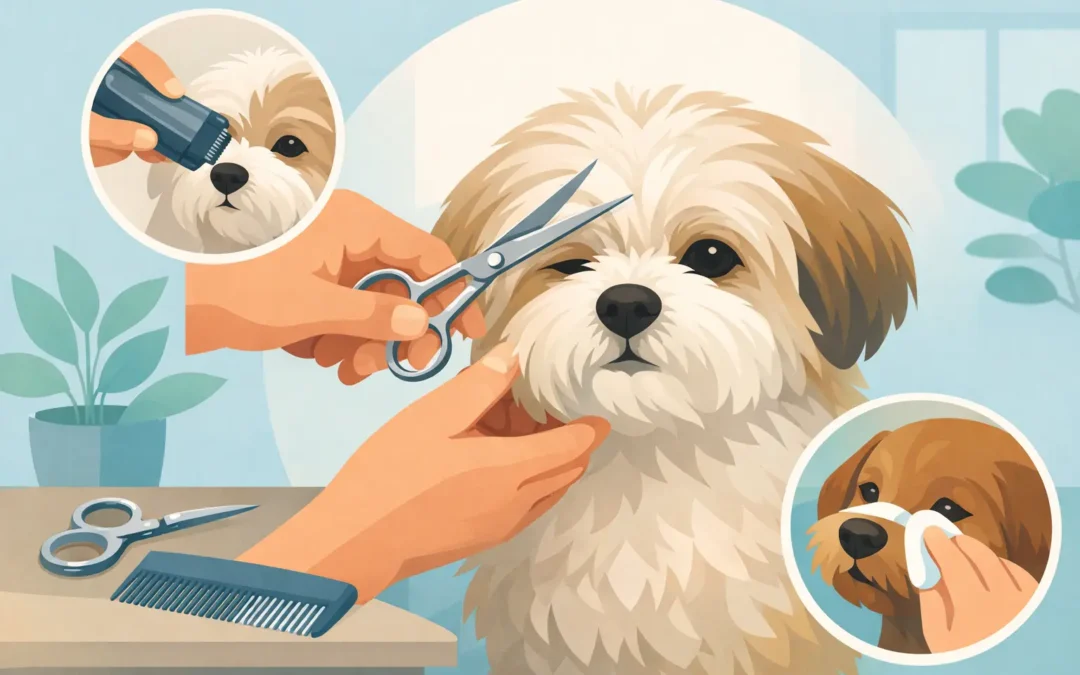
A fresh face trim does more than make your dog look adorable in photos. It keeps hair out of their eyes, helps prevent food and moisture from lingering around the mouth, and lets them move through the day more comfortably. Learning how to maintain dog face trim at home helps preserve that clean, bright look between grooming appointments without turning your bathroom into a stressful salon.
The goal is not to recreate a professional groom at home. A polished facial trim takes trained hands, the right tools, and an understanding of each dog’s coat, face shape, and comfort level. Your role is simply to provide gentle touch-ups and daily care that keep your pet feeling pampered until their next visit.
Start With a Gentle Daily Face Check
A quick look at your dog’s face each day can prevent small tangles and stains from becoming uncomfortable problems. Check the hair around the eyes, corners of the mouth, chin, and beard area. Dogs with curly, wiry, or longer coats often need a little more attention, especially after meals, walks, and playtime.
Use a clean, soft, damp cloth or pet-safe facial wipe to remove food crumbs, dried saliva, or tear residue. Wipe in the direction of hair growth and keep products well away from the eyes and nostrils. The skin around the face is delicate, so a gentle touch matters more than a vigorous scrub.
If your dog has a white or light-colored coat, you may notice staining beneath the eyes or around the mouth more easily. Staining can have several causes, including tears, saliva, diet, and facial structure. Daily cleaning can improve the appearance, but persistent irritation, odor, discharge, or redness deserves a conversation with your veterinarian.
Brush the Face Before Mats Form
Mats can form quickly around a dog’s eyes, ears, cheeks, and beard. They may look minor at first, but they pull on the skin and can make grooming painful. A brief face brush every few days is often enough for smooth or short coats. Curly-coated breeds and dogs with fuller furnishings may benefit from daily brushing.
Choose a small, soft slicker brush or a fine-toothed metal comb designed for pets. Work slowly in tiny sections, beginning at the ends of the hair and moving toward the skin. Hold the hair gently near the base as you comb so you do not tug at your dog’s face.
Pay close attention to the hair under the chin and along the jawline, where moisture from drinking and eating can create tangles. For dogs with beards, a quick comb after meals keeps crumbs from settling in and helps the beard stay light and soft rather than sticky or matted.
Keep Eye Hair Clear, Not Shorter Than Necessary
Hair falling into the eyes can lead to squinting, rubbing, and irritation. If you see a few strands drifting forward, brush them back into place first. Sometimes the hair only needs to be dried and combed after a bath rather than cut.
Avoid using scissors close to your dog’s eyes, particularly if they wiggle, blink, or become nervous around grooming tools. Even a calm dog can move suddenly. If eye hair is repeatedly blocking their vision, a professional face trim is the kindest option. A groomer can shape the area carefully while keeping your pet’s safety and comfort at the center of the experience.
Use Scissors Only for Very Simple Touch-Ups
There is a meaningful difference between snipping a stray beard hair and reshaping an entire face. At-home trimming should stay on the conservative side. If you feel unsure, stop. A slightly fluffy face is always better than a rushed trim that leaves uneven patches or puts your dog at risk.
When a simple touch-up is appropriate, use rounded-tip pet grooming scissors, good lighting, and a calm surface where your dog feels secure. Have treats ready, keep the session brief, and make only one or two small snips at a time. Never trim toward the eyes, lips, or skin. Comb the hair away from the face first, then trim only the ends that clearly extend beyond the desired shape.
Skip scissors altogether if your dog is restless, fearful, newly adopted, elderly, or sensitive to handling around the face. Some pets need gradual confidence-building before they can tolerate facial grooming. That is not bad behavior. It is valuable information about how they need to be cared for.
Make Mealtime Part of Face-Trim Maintenance
A neat face trim can lose its polished look quickly when food and water collect around the muzzle. This is especially common for dogs with beards, short noses, or deep facial folds. A quick wipe after meals and a fresh-water check after drinking can make a noticeable difference.
For dogs with fuller facial hair, consider offering water in a bowl that keeps the beard from soaking as deeply. The best choice depends on your dog’s muzzle shape and drinking habits, so watch what actually works for them rather than forcing a one-size-fits-all routine. Dry the beard gently afterward, then run a comb through it once it is no longer damp.
Facial folds need special attention. Clean them with a pet-safe product recommended for your dog, and dry them thoroughly. Moisture trapped in folds can contribute to odor and skin discomfort. If you notice recurring redness, itching, or a sour smell, schedule veterinary guidance rather than trying stronger products at home.
Build Comfort Around Face Handling
The easiest way to maintain a dog face trim is to help your dog feel safe with the process. Practice when everyone is relaxed, not when you are rushing out the door or your dog is already tired of being handled. Start by gently touching the cheeks, lifting the chin for a second, and rewarding calm behavior with praise or a tiny treat.
Over several short sessions, introduce the brush and comb without immediately using them. Let your dog sniff the tool, then make one easy stroke and reward them. This patient approach helps grooming feel predictable rather than intrusive. It also makes professional appointments more pleasant because your dog learns that face care can be calm, brief, and reassuring.
Know When It Is Time for a Professional Face Trim
Home maintenance protects the shape of a groom, but it cannot replace a full facial service. Most dogs benefit from a professional face trim every few weeks, though the ideal timing depends on coat growth, lifestyle, and the style you prefer. A Poodle or Doodle may need more frequent visits than a short-coated dog with only light feathering around the muzzle.
Book sooner if your dog’s hair is covering their eyes, mats are forming near the mouth or ears, the beard stays damp or stained despite regular cleaning, or their face has lost its balanced shape. These are comfort concerns as much as appearance concerns.
At Jolis Grooming, a face trim is approached as personalized care, not a quick cosmetic add-on. A gentle professional can assess your dog’s coat, work around their individual sensitivities, and create a clean, soft finish that suits their features. Regular appointments also make it easier to catch developing matting or skin concerns before they become more uncomfortable.
A Small Routine That Keeps Them Feeling Their Best
The best maintenance plan is one you can repeat with patience: wipe away daily mess, brush before tangles tighten, and leave detailed shaping to a trusted groomer. Your dog does not need perfection at home. They need kind handling, a clear view, a clean muzzle, and the comfort of knowing that grooming time is another moment of care shared with you.