
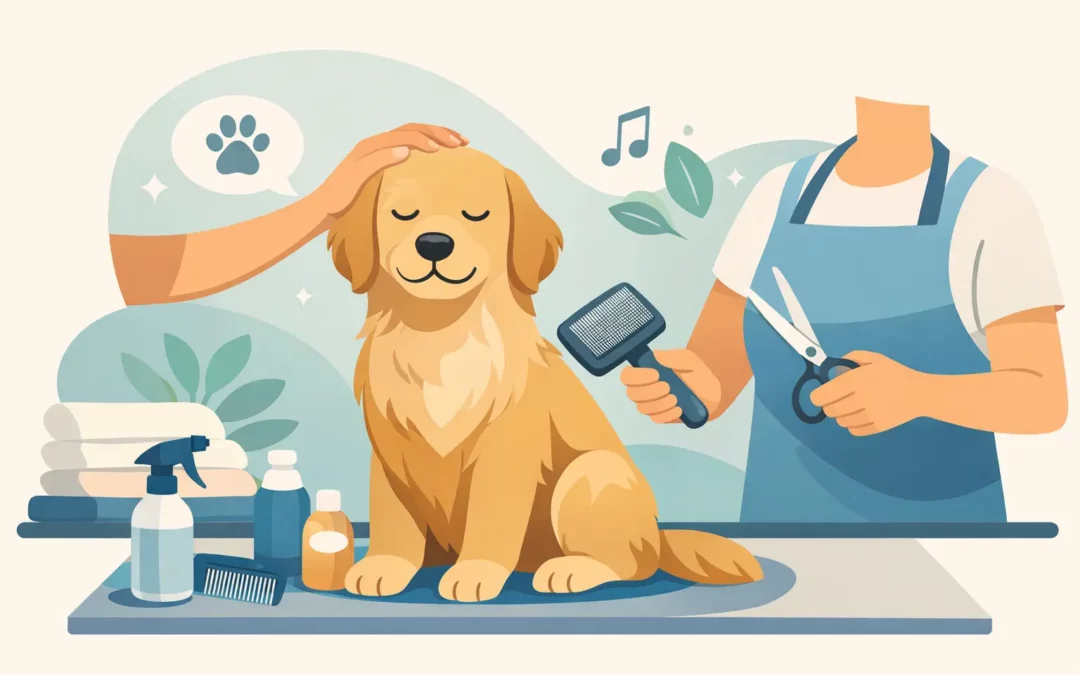
A nervous dog can tell you exactly how they feel without making a sound – the tucked tail, the stiff legs, the quick glance toward the door. If you have ever wondered how to keep dogs calm during grooming, the answer usually starts long before the bath, brush, or nail trim begins. Calm grooming is rarely about forcing cooperation. It is about creating trust, reading your dog’s signals, and making each step feel safe.
For many dogs, grooming brings together several things they do not naturally love: new sounds, handling around sensitive areas, slippery surfaces, and separation from their favorite person. That does not mean grooming has to become a battle. With the right approach, it can feel more like a steady, reassuring routine that supports your dog’s comfort, hygiene, and confidence.
Why some dogs struggle with grooming
Every dog brings a different history into the grooming space. A puppy may simply be unsure because everything is new. An older dog may have joint stiffness that makes standing uncomfortable. Some dogs dislike the sensation of clippers or the sound of a dryer, while others become anxious when their paws, ears, or face are touched.
That is why there is no single trick that works for every pet. A calm Labrador who enjoys attention may only need gentle handling and a few breaks. A rescue dog with past stress may need a slower introduction and shorter appointments. The goal is not to expect every dog to love grooming right away. The goal is to help them feel secure enough to tolerate it well, then gradually build a more positive experience.
How to keep dogs calm during grooming at home
If you groom your dog at home between appointments, your routine matters as much as your tools. Dogs pick up on energy quickly. When grooming feels rushed, loud, or unpredictable, many pets tense up before you even begin.
Start with timing. Choose a part of the day when your dog is naturally more relaxed, such as after a walk or light play session. A dog with pent-up energy often has a harder time standing still for brushing or a paw trim. Exercise does not solve anxiety on its own, but it often takes the edge off.
Set up a quiet space with secure footing. Slippery floors can make even confident dogs feel unsure, especially during baths. A non-slip mat in the tub or on the grooming surface helps your dog feel physically stable, and physical stability often leads to emotional calm.
Then keep the session short. One common mistake is trying to do everything at once. If your dog becomes uneasy with brushing after ten minutes, stop before that point next time. It is better to have three peaceful mini sessions during the week than one long struggle that teaches your dog to dread the process.
Use touch and praise with intention
Gentle handling makes a bigger difference than many owners realize. Instead of restraining your dog quickly when they pull away, pause and reset. Speak in a calm, even voice. Offer praise when your dog stands still, allows a paw to be handled, or remains relaxed during brushing.
Treats can help, but they work best when paired with timing and consistency. Reward the calm moment you want repeated. If your dog accepts the brush on their shoulder without flinching, that is worth reinforcing. Over time, your dog starts connecting grooming with safety and positive attention instead of tension.
Introduce tools before you need them
Many dogs react not to grooming itself, but to the surprise of unfamiliar sensations. Let your dog sniff the brush before using it. Turn on the dryer at a distance for a few seconds, then turn it off. Touch nail clippers to the paw without trimming right away.
This slower introduction can feel like extra work, but it often saves stress later. Dogs who are allowed to get comfortable in stages tend to cope better than dogs who are expected to accept every tool all at once.
Preparing your dog for a calmer grooming appointment
Professional grooming can be a wonderful support for coat health, skin care, nail maintenance, and overall comfort, but preparation still matters. If your dog only encounters brushing, paw handling, and face touching at the salon, appointments can feel overwhelming.
At home, practice small moments that mirror the grooming experience. Lift each paw gently. Touch around the muzzle. Look in the ears. Brush for a minute, then stop on a positive note. These simple routines teach your dog that being handled is normal, not alarming.
It also helps to arrive with realistic expectations. If your dog is very young, highly sensitive, or new to grooming, the first visit may focus more on comfort and introduction than perfection. That is not a setback. It is often the foundation for better visits ahead.
Keep your own energy steady
Dogs are deeply tuned in to their owners. If you act apologetic, tense, or worried at drop-off, your dog may assume something is wrong. A warm, confident handoff sends a different message. You are telling your pet, in effect, this is a safe place and these people are here to care for you.
That does not mean ignoring your dog’s needs. It means avoiding the emotional buildup that can make a normal appointment feel like a stressful event. Calm in, calm out.
The comfort-first difference in professional grooming
When pet parents ask how to keep dogs calm during grooming, one of the biggest factors is choosing the right environment. A comfort-first salon does more than complete a checklist of services. It pays attention to pace, handling, noise level, product choice, and the dog’s emotional state throughout the visit.
That matters because grooming is personal. A face trim requires trust. Nail and paw care involve sensitive handling. Drying, brushing, and detangling all feel different depending on the dog, their coat type, and their tolerance that day. In a thoughtful grooming setting, the process is adjusted to the pet rather than expecting the pet to simply endure the process.
Some dogs need extra reassurance around the head and ears. Others do better with brief breaks during brushing or fluff drying. Some need a quieter, more measured approach from the moment they walk through the door. Personalized care is not just a nice detail. For anxious dogs, it can be the reason a grooming visit feels manageable instead of distressing.
At Jolis Grooming, that comfort-first mindset is part of what makes grooming feel more like attentive care than routine maintenance. For local pet parents, that means a cleaner coat, healthier skin, tidier paws, and a polished finish delivered with the kind of gentle attention dogs can feel.
Signs your dog needs a slower approach
Not every dog shows stress in obvious ways. Some shake or whine, but others become very still, avoid eye contact, pant heavily, or resist only when a specific area is touched. Those details matter.
If your dog becomes upset during nail trims but tolerates bathing well, the answer may be targeted desensitization for paw handling rather than changing the entire grooming routine. If your dog struggles more when matted, the issue may be discomfort from the coat itself, which is a reminder that regular maintenance often prevents stress later.
There is also a point where pushing through stops being productive. If your dog is escalating, it is usually better to pause and reassess than to turn grooming into a fight. Progress often comes faster when trust is protected.
Small habits that make future visits easier
Consistency has a calming effect. Dogs tend to do better when grooming is part of normal life instead of an occasional, overwhelming event. Regular brushing keeps the coat more manageable. Frequent paw handling makes nail care less dramatic. Routine appointments help dogs become familiar with the process, the environment, and the people caring for them.
This is especially true for breeds with coats that need ongoing upkeep. Waiting too long between visits can lead to tangles, matting, and more time on the table, which can make the experience harder for everyone. A steady schedule is not just about appearance. It helps protect your dog’s comfort.
The same goes for celebrating small wins. If your dog stood calmly for part of a brush-out today when they used to pull away immediately, that is progress. If they tolerated a face trim better than last time, that counts. Calm grooming is often built in layers.
A dog does not need to love every second of grooming to have a good experience. They need to feel handled with patience, cared for with kindness, and supported by a routine that respects their limits while gently expanding their comfort. When grooming is approached that way, it becomes more than upkeep. It becomes part of the way you help your dog feel clean, comfortable, and well cared for.