
How to Brush Double Coat Dogs Right
That thick cloud of fur on your floor is usually your first clue that your dog’s coat needs more than a quick once-over. If you have been wondering how to brush double coat dogs without causing discomfort or creating an even bigger mess, the good news is that the right approach can make grooming feel calmer, cleaner, and much more manageable for both of you.
Double-coated dogs have two layers working together. The topcoat helps protect against dirt, moisture, and sun, while the soft undercoat acts like insulation. Breeds such as Golden Retrievers, Huskies, German Shepherds, Australian Shepherds, and Pomeranians often have this coat type, and it needs thoughtful care. Brushing is not just about appearance. It supports skin health, reduces painful tangles, helps control shedding, and keeps your dog more comfortable in Florida’s warm, humid weather.
Why brushing a double coat needs a different approach
A double coat should never be treated like a short, single coat. The outer layer can look neat even when the undercoat is packed with loose hair close to the skin. That is why some dogs seem brushed on the surface but still shed heavily or develop hidden mats around the neck, behind the ears, under the legs, and around the hindquarters.
The biggest mistake pet parents make is brushing only the top layer. It feels productive, but it leaves behind the dense undercoat that causes most of the trouble. Gentle, thorough brushing reaches all the way through without scraping the skin or breaking healthy coat.
There is a balance here. Too little brushing leads to tangles, trapped debris, and more shedding around the house. Too much pressure, or the wrong tool, can irritate the skin and damage the protective topcoat. The goal is not to strip the coat down. It is to remove what is loose, keep the layers separated and breathable, and leave your dog looking polished and feeling relaxed.
How to brush double coat dogs without stressing them out
Start in a quiet space where your dog can settle. A grooming table is helpful if your dog is comfortable with it, but a non-slip mat on the floor works well too. Keep sessions calm, offer praise often, and do not expect a full perfect groom if your dog is new to brushing. For some pets, ten peaceful minutes is far better than thirty frustrating ones.
Before you begin, lightly mist the coat with a dog-safe grooming spray if you have one. Brushing a completely dry coat can create static and make hair break more easily, especially in longer-coated breeds. The coat should be slightly dampened, not wet.
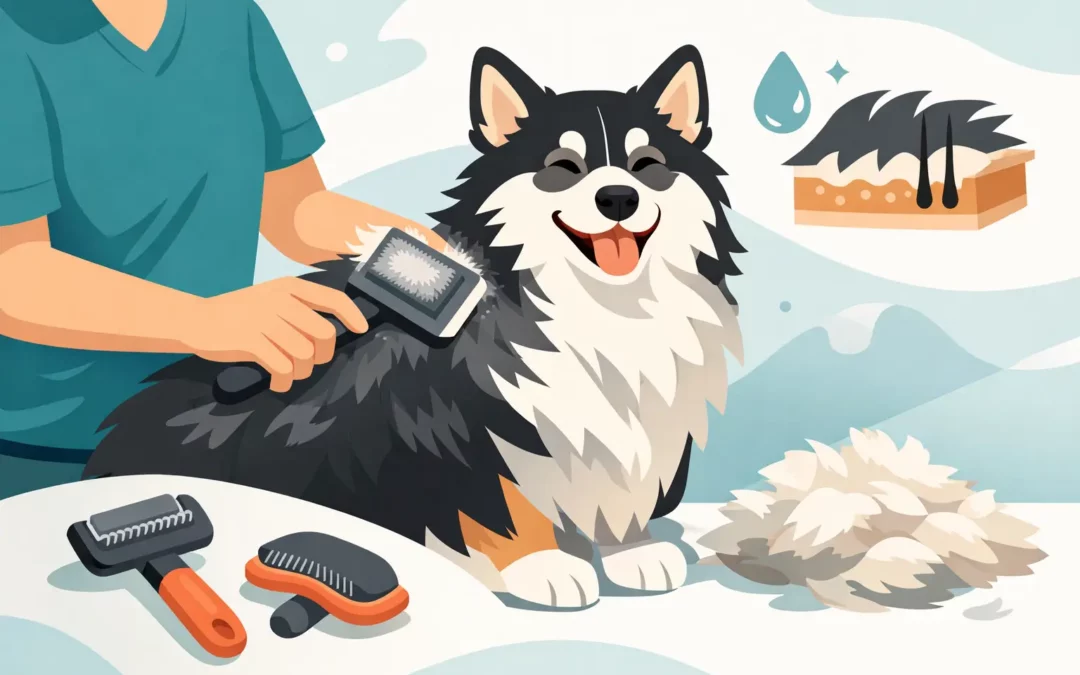
The best technique is often called line brushing. Begin near the back legs or lower side of the body and part the coat so you can see the skin. Brush a small section outward, then move up bit by bit. This keeps you from skating across the top and missing the undercoat underneath.
A slicker brush is useful for loosening debris and removing light tangles. An undercoat rake can help lift out loose, dead undercoat in heavier shedders. A steel comb is excellent for checking your work, especially in feathered areas where mats like to hide. You do not need to overcomplicate it, but using one tool for every coat and every situation usually falls short.
Brush with gentle, controlled strokes. If you hit resistance, pause and work the section from the ends outward instead of pulling from the skin. Tugging turns grooming into something your dog dreads, and once that happens, every future session gets harder.
The order matters more than most owners realize
When learning how to brush double coat dogs, sequence makes a difference. Start with easier areas so your pet can settle into the routine. The shoulders, sides, and back are often the least sensitive. Once your dog is relaxed, move to the chest, feathering, tail, and the spots where mats form more easily.
Behind the ears deserves extra attention. The hair there is soft and fine, which means it mats faster than many owners expect. The same is true in the armpits and around the rear. These areas need patience, not force.
Finish by running a comb through the coat. If the comb glides through smoothly from skin to tip, you have likely done a thorough job. If it catches, there is still loose coat or a tangle that needs a gentler second pass.
How often should you brush a double-coated dog?
It depends on breed, coat length, activity level, and season. Many double-coated dogs do well with brushing two to three times a week. During seasonal coat blows, daily brushing may be the difference between a manageable routine and tumbleweeds of fur drifting across your living room.
If your dog spends plenty of time outdoors, swims often, or has longer feathering, more frequent maintenance usually helps. If your dog has a shorter plush double coat, you may not need long sessions as often, but consistency still matters. Small, regular grooming sessions are usually kinder than waiting until the coat is impacted and uncomfortable.
In Central Florida, humidity can make the undercoat hold onto moisture and debris. That means a neglected coat can start to feel heavy and congested faster than many owners expect. Regular brushing keeps air moving through the coat and helps your dog stay more comfortable.
Common mistakes that can damage the coat
One of the most common mistakes is shaving a double coat without a medical reason. Many owners think removing all that hair will help a dog stay cooler, but double coats are designed to regulate temperature and protect the skin. Shaving can interfere with regrowth, leave the skin vulnerable, and sometimes change the texture of the coat.
Another issue is using excessive force with deshedding tools. Some tools are helpful in skilled hands, but overuse can cut healthy topcoat and leave the coat looking patchy or rough. If your dog’s coat suddenly appears thin or uneven after brushing, the tool or technique may be too aggressive.
Skipping baths is another hidden problem. A clean coat brushes out better than a dirty one. Dirt, oils, and trapped loose hair cling together, making brushing less effective and less comfortable. For many double-coated breeds, a proper bath followed by a fluff dry and brush-out gives the best results, especially during heavy shedding seasons.
When at-home brushing is enough, and when professional help makes sense
Routine maintenance at home is a wonderful way to bond with your dog and keep the coat in good shape between appointments. If your pet enjoys brushing and the coat stays free of mats, regular home care can go a long way.
But there are times when professional grooming is the kinder option. If the undercoat is impacted, the hair is compacted close to the skin, or your dog resists brushing because of discomfort, it is easy to make things worse by pushing through. Senior dogs, puppies, and anxious pets often benefit from a gentler, more structured grooming experience.
A professional groomer can safely bathe, dry, and brush the coat in a way that removes deep loose undercoat without unnecessary pulling. That is especially helpful for dogs in full shed, dogs with thick seasonal coats, or busy pet parents who want their dog looking fresh and feeling comfortable without the struggle.
At Jolis Grooming, comfort is part of the service, not an afterthought. For double-coated dogs, that kind of patient, personalized handling can make all the difference between a stressful grooming day and a soothing one.
A brushing routine your dog can actually enjoy
The most effective grooming routine is the one you can keep up with. Choose a time when your dog is naturally calm, keep your tools nearby, and make brushing feel predictable and pleasant. A few minutes after an evening walk or before bedtime often works better than trying to squeeze it in when everyone is rushed.
Watch your dog’s signals. If your pet starts leaning into the brush, relaxing, or calmly standing for the next section, you are on the right track. If your dog flinches, turns away, or becomes restless, it may be time to adjust your pressure, shorten the session, or ask for professional support.
A beautifully maintained double coat is not just about reducing shedding or keeping your dog photo-ready. It is about comfort, cleanliness, and caring for your pet in a way they can feel. When brushing is done gently and consistently, it becomes one more way to show your dog they are safe, cherished, and very well cared for.