
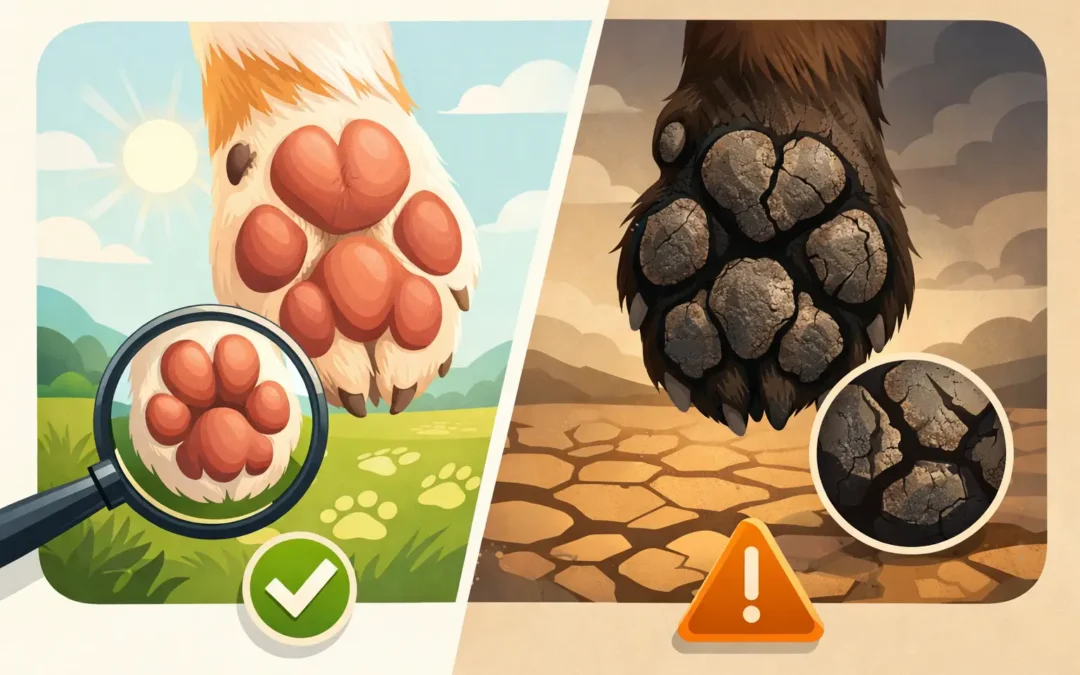
A paw print on the floor may look sweet, but the pads behind it do serious work. If you have been wondering, why are dog paws rough, the short answer is that a little texture is usually completely normal. Paw pads are built to protect your dog from sidewalks, grass, sand, and every joyful lap around the neighborhood.
Still, there is a difference between naturally sturdy paws and pads that are painfully dry, cracked, or irritated. A quick, gentle look at your dog’s feet can help you spot when they simply need routine pampering and when they may need veterinary attention.
Why Are Dog Paws Rough in the First Place?
Dog paw pads have a naturally thick outer layer of skin called keratin. It is similar to the tough skin that forms on the soles of our feet, only your dog relies on it much more often. This protective surface gives them traction, cushions each step, and helps shield the sensitive tissue underneath from everyday wear.
A healthy paw pad often feels firm, slightly pebbled, and a bit dry compared with the softer skin on your dog’s belly. Some dogs have naturally rougher pads than others. A large, active dog who spends plenty of time walking on pavement may have thicker, more textured pads than a small dog who mostly walks on soft indoor flooring.
Florida’s warm weather can also play a role. Hot sidewalks, pool decks, sandy paths, and rough outdoor surfaces may gradually make pads feel tougher. That does not automatically mean something is wrong. It simply means those paws are doing the job they were designed to do.
When Rough Paw Pads Are Normal
A dog’s paws are usually in good shape when the pads are evenly textured, free from deep cracks, and not causing discomfort. Your dog should be happy to walk, run, and let you touch their feet without pulling away or showing signs of pain.
It is also common for pads to become mildly rougher during periods of increased activity. A family beach day, a new walking routine, or lots of playtime in the backyard can all leave their mark. In these cases, gentle maintenance and a little recovery time are often enough to keep paws comfortable.
Dogs with furry feet deserve an extra look between the toes. Hair can hold onto dirt, moisture, small bits of grass, and debris. Keeping that area clean and neatly trimmed supports comfort and makes it easier for pet parents to notice changes in the skin or pads.
Signs Your Dog’s Rough Paws Need More Attention
Roughness becomes a concern when it is paired with visible damage or a change in your dog’s behavior. Dry, flaky pads can progress to splits or painful cracks, especially after repeated exposure to heat, harsh surfaces, or drying products.
Watch for limping, licking or chewing at the feet, redness between the toes, bleeding, swelling, an unusual odor, or a reluctance to walk. A pad that looks pale, raw, deeply cracked, or unusually thick in one area deserves closer attention. Sudden changes are particularly worth taking seriously.
Allergies can sometimes show up in a dog’s paws first. Dogs may lick and chew their feet after walks because pollen, lawn treatments, or other environmental irritants are bothering their skin. Yeast or bacterial infections, parasites, injuries, and certain skin conditions can also cause discomfort that looks like ordinary dryness at first glance.
If your dog is in pain, has an open wound, or continues licking their paws despite gentle home care, call your veterinarian. Grooming supports healthy maintenance, but a veterinarian is the right partner for diagnosing infection, allergies, or medical skin concerns.
Common Reasons Paw Pads Become Dry and Cracked
Paw pads can lose moisture for several reasons, and often it is a combination rather than one single cause. Frequent walks on hot pavement or abrasive concrete can wear down the surface. During Central Florida summers, a surface that feels merely warm to a hand can be much hotter against a dog’s pads. If you cannot comfortably hold the back of your hand on the pavement for several seconds, it is safer to choose grass, shade, or a cooler time of day.
Dry air indoors, frequent bathing with unsuitable products, and contact with cleaning chemicals can also leave paws feeling less supple. Even a dog who loves splashing in puddles can develop dry pads afterward if moisture, shampoo residue, or debris remains trapped between the toes.
Age and lifestyle matter, too. Senior dogs may have more fragile skin, while highly active dogs can develop thicker calluses from regular impact. Neither situation calls for aggressive smoothing. The goal is comfortable, protected pads, not perfectly soft feet.
Gentle Paw Care That Makes a Difference
A thoughtful paw routine is one of the simplest ways to make your dog feel cared for from nose to tail. Start by checking their paws after walks, particularly after time on hot pavement, at the park, or near treated lawns. Wipe away dirt and gently dry between the toes so moisture does not linger.
Use only products formulated for dogs. Human lotions, essential oils, and heavily fragranced creams can be irritating, and many are unsafe if licked. A pet-safe paw balm may help restore moisture to dry but intact pads. Apply a small amount, allow it to absorb, and offer a calm distraction afterward if your dog is tempted to lick it right away.
Regular nail care matters just as much as moisturizing. Overgrown nails can change the way a dog places their feet, putting extra pressure on the pads and toes. Keeping nails at a comfortable length helps support a more natural gait and makes everyday walks feel better.
At home, avoid trying to shave down calluses, cut cracked pads, or pull out deeply embedded debris. A tiny splinter that is easy to see may be one thing, but anything lodged deeply, bleeding, or causing obvious pain should be assessed by a veterinary professional.
Professional Grooming Supports Healthy, Happy Feet
Paw care can be easy to overlook until a dog starts fussing with their feet. Professional grooming gives those small but meaningful details the attention they deserve. During a comfort-focused appointment, paw areas can be cleaned, fur between the pads can be neatly maintained when appropriate, and nails can be cared for with a gentle touch.
For dogs who are sensitive about having their feet handled, a patient grooming experience can also build trust over time. Slow, calm handling helps many pets become more comfortable with routine paw checks and nail care. That is especially valuable for busy pet parents who want their dog looking polished while also feeling relaxed and cared for.
At Jolis Grooming, paw and nail treatment is approached as part of the whole-pet experience. A fresh bath, soft brushing, tidy feet, and attentive handling can leave a dog feeling lighter, cleaner, and ready to put their best paw forward.
A Simple Paw Check for Pet Parents
Make a habit of looking at your dog’s paws once a week, or more often if they are active outdoors. Lift each foot gently and check the pad surface, nails, and spaces between the toes. You are looking for changes, not chasing perfection.
Healthy paws may be rough, but they should not look painful. Notice whether the texture is even, whether your dog reacts when you touch a certain spot, and whether there is trapped debris or excess fur. These quiet moments of care are also a lovely way to strengthen the trust between you and your pet.
Your dog’s paws carry them to every cuddle, every car ride, and every happy greeting at the door. Giving those hardworking pads a little regular attention helps keep each step comfortable, confident, and full of tail-wagging possibility.